- Home
- FPMT Homepage
Foundation for the Preservation of the Mahayana Tradition
The FPMT is an organization devoted to preserving and spreading Mahayana Buddhism worldwide by creating opportunities to listen, reflect, meditate, practice and actualize the unmistaken teachings of the Buddha and based on that experience spreading the Dharma to sentient beings. We provide integrated education through which people’s minds and hearts can be transformed into their highest potential for the benefit of others, inspired by an attitude of universal responsibility and service. We are committed to creating harmonious environments and helping all beings develop their full potential of infinite wisdom and compassion. Our organization is based on the Buddhist tradition of Lama Tsongkhapa of Tibet as taught to us by our founders Lama Thubten Yeshe and Lama Thubten Zopa Rinpoche.
- Willkommen
Die Stiftung zur Erhaltung der Mahayana Tradition (FPMT) ist eine Organisation, die sich weltweit für die Erhaltung und Verbreitung des Mahayana-Buddhismus einsetzt, indem sie Möglichkeiten schafft, den makellosen Lehren des Buddha zuzuhören, über sie zur reflektieren und zu meditieren und auf der Grundlage dieser Erfahrung das Dharma unter den Lebewesen zu verbreiten.
Wir bieten integrierte Schulungswege an, durch denen der Geist und das Herz der Menschen in ihr höchstes Potential verwandelt werden zum Wohl der anderen – inspiriert durch eine Haltung der universellen Verantwortung und dem Wunsch zu dienen. Wir haben uns verpflichtet, harmonische Umgebungen zu schaffen und allen Wesen zu helfen, ihr volles Potenzial unendlicher Weisheit und grenzenlosen Mitgefühls zu verwirklichen.
Unsere Organisation basiert auf der buddhistischen Tradition von Lama Tsongkhapa von Tibet, so wie sie uns von unseren Gründern Lama Thubten Yeshe und Lama Thubten Zopa Rinpoche gelehrt wird.
- Bienvenidos
La Fundación para la preservación de la tradición Mahayana (FPMT) es una organización que se dedica a preservar y difundir el budismo Mahayana en todo el mundo, creando oportunidades para escuchar, reflexionar, meditar, practicar y actualizar las enseñanzas inconfundibles de Buda y en base a esa experiencia difundir el Dharma a los seres.
Proporcionamos una educación integrada a través de la cual las mentes y los corazones de las personas se pueden transformar en su mayor potencial para el beneficio de los demás, inspirados por una actitud de responsabilidad y servicio universales. Estamos comprometidos a crear ambientes armoniosos y ayudar a todos los seres a desarrollar todo su potencial de infinita sabiduría y compasión.
Nuestra organización se basa en la tradición budista de Lama Tsongkhapa del Tíbet como nos lo enseñaron nuestros fundadores Lama Thubten Yeshe y Lama Zopa Rinpoche.
A continuación puede ver una lista de los centros y sus páginas web en su lengua preferida.
- Bienvenue
L’organisation de la FPMT a pour vocation la préservation et la diffusion du bouddhisme du mahayana dans le monde entier. Elle offre l’opportunité d’écouter, de réfléchir, de méditer, de pratiquer et de réaliser les enseignements excellents du Bouddha, pour ensuite transmettre le Dharma à tous les êtres. Nous proposons une formation intégrée grâce à laquelle le cœur et l’esprit de chacun peuvent accomplir leur potentiel le plus élevé pour le bien d’autrui, inspirés par le sens du service et une responsabilité universelle. Nous nous engageons à créer un environnement harmonieux et à aider tous les êtres à épanouir leur potentiel illimité de compassion et de sagesse. Notre organisation s’appuie sur la tradition guéloukpa de Lama Tsongkhapa du Tibet, telle qu’elle a été enseignée par nos fondateurs Lama Thoubtèn Yéshé et Lama Zopa Rinpoché.
Visitez le site de notre Editions Mahayana pour les traductions, conseils et nouvelles du Bureau international en français.
Voici une liste de centres et de leurs sites dans votre langue préférée
- Benvenuto
L’FPMT è un organizzazione il cui scopo è preservare e diffondere il Buddhismo Mahayana nel mondo, creando occasioni di ascolto, riflessione, meditazione e pratica dei perfetti insegnamenti del Buddha, al fine di attualizzare e diffondere il Dharma fra tutti gli esseri senzienti.
Offriamo un’educazione integrata, che può trasformare la mente e i cuori delle persone nel loro massimo potenziale, per il beneficio di tutti gli esseri, ispirati da un’attitudine di responsabilità universale e di servizio.
Il nostro obiettivo è quello di creare contesti armoniosi e aiutare tutti gli esseri a sviluppare in modo completo le proprie potenzialità di infinita saggezza e compassione.
La nostra organizzazione si basa sulla tradizione buddhista di Lama Tsongkhapa del Tibet, così come ci è stata insegnata dai nostri fondatori Lama Thubten Yeshe e Lama Zopa Rinpoche.
Di seguito potete trovare un elenco dei centri e dei loro siti nella lingua da voi prescelta.
- 欢迎 / 歡迎
简体中文
“护持大乘法脉基金会”( 英文简称:FPMT。全名:Foundation for the Preservation of the Mahayana Tradition) 是一个致力于护持和弘扬大乘佛法的国际佛教组织。我们提供听闻,思维,禅修,修行和实证佛陀无误教法的机会,以便让一切众生都能够享受佛法的指引和滋润。
我们全力创造和谐融洽的环境, 为人们提供解行并重的完整佛法教育,以便启发内在的环宇悲心及责任心,并开发内心所蕴藏的巨大潜能 — 无限的智慧与悲心 — 以便利益和服务一切有情。
FPMT的创办人是图腾耶喜喇嘛和喇嘛梭巴仁波切。我们所修习的是由两位上师所教导的,西藏喀巴大师的佛法传承。
繁體中文
護持大乘法脈基金會”( 英文簡稱:FPMT。全名:Found
ation for the Preservation of the Mahayana Tradition ) 是一個致力於護持和弘揚大乘佛法的國際佛教組織。我們提供聽聞, 思維,禪修,修行和實證佛陀無誤教法的機會,以便讓一切眾生都能 夠享受佛法的指引和滋潤。 我們全力創造和諧融洽的環境,
為人們提供解行並重的完整佛法教育,以便啟發內在的環宇悲心及責 任心,並開發內心所蘊藏的巨大潛能 — 無限的智慧與悲心 – – 以便利益和服務一切有情。 FPMT的創辦人是圖騰耶喜喇嘛和喇嘛梭巴仁波切。
我們所修習的是由兩位上師所教導的,西藏喀巴大師的佛法傳承。 察看道场信息:
- FPMT Homepage
- News/Media
-
- Study & Practice
-
-
- About FPMT Education Services
- Latest News
- Programs
- New to Buddhism?
- Buddhist Mind Science: Activating Your Potential
- Heart Advice for Death and Dying
- Discovering Buddhism
- Living in the Path
- Exploring Buddhism
- FPMT Basic Program
- FPMT Masters Program
- FPMT In-Depth Meditation Training
- Maitripa College
- Lotsawa Rinchen Zangpo Translator Program
- Universal Education for Compassion & Wisdom
- Online Learning Center
-
- Prayers & Practice Materials
- Overview of Prayers & Practices
- Full Catalogue of Prayers & Practice Materials
- Explore Popular Topics
- Benefiting Animals
- Chenrezig Resources
- Death & Dying Resources
- Lama Chopa (Guru Puja)
- Lama Zopa Rinpoche: Compendium of Precious Instructions
- Lama Zopa Rinpoche: Life Practice Advice
- Lama Zopa Rinpoche Practice Series
- Lamrim Resources
- Mantras
- Prayer Book Updates
- Purification Practices
- Sutras
- Thought Transformation (Lojong)
- Audio Materials
- Dharma Dates - Tibetan Calendar
- Translation Services
- Publishing Services
- Ways to Offer Support
- Prayers & Practice Materials
-
- Teachings and Advice
- Find Teachings and Advice
- Lama Zopa Rinpoche Advice Page
- Lama Zopa Rinpoche: Compendium of Precious Instructions
- Lama Zopa Rinpoche Video Teachings
- ༧སྐྱབས་རྗེ་བཟོད་པ་རིན་པོ་ཆེ་མཆོག་ནས་སྩལ་བའི་བཀའ་སློབ་བརྙན་འཕྲིན།
- Podcasts
- Lama Yeshe Wisdom Archive
- Buddhism FAQ
- Dharma for Young People
- Resources on Holy Objects
- Teachings and Advice
-
-
*If a menu item has a submenu clicking once will expand the menu clicking twice will open the page.
-
-
- Centers
-
- Teachers
-
- Projects
-
-
-
Guided by Lama Zopa Rinpoche’s Vast Visions
FPMT’s Charitable Projects bring the teachings to life through service, practice and community.
-
-
-
-
-
- APPLYING FOR GRANTS →For projects that further the FPMT mission. Applications open January 1 – February 28.
-
-
- LATEST NEWS
-
-
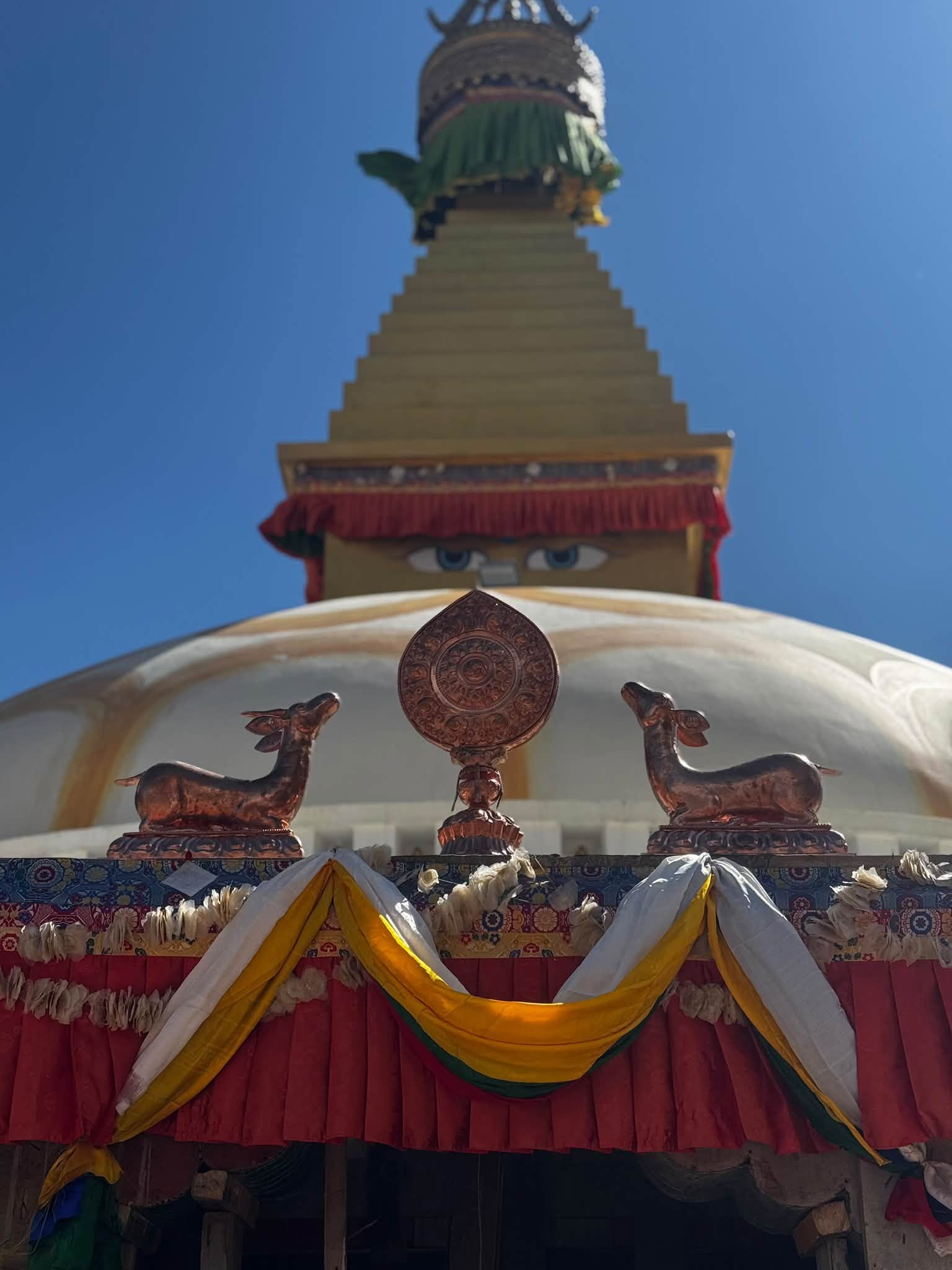
The Continuing Blessings of Thame Stupa in Solu Khumbu, Nepal
Holy Objects | November 11, 2026 -One of the great joys of creating holy objects is seeing them continue to benefit sentient beings for generations. Caring for them, making offerings, and ensuring they remain beautiful and accessible are also meaningful practices of compassion, generosity, devotion, and … Read more »
-
-
-
- Support
- FPMT
-
-
-
-
-
The reason we are unhappy is because we have extreme craving for sense objects – samsaric objects – and we grasp at them. We are seeking to solve our problems, but we are not seeking in the right place. The right place is our ego-grasping.
Lama Thubten Yeshe
-
-
-
- Shop
-
-
-
The Foundation Store is FPMT’s online shop and features a vast selection of Buddhist study and practice materials written or recommended by our lineage gurus. These items include homestudy programs, prayers and practices in PDF or eBook format, materials for children, and other resources to support practitioners.
Items displayed in the shop are made available for Dharma practice and educational purposes, and never for the purpose of profiting from their sale. Please read FPMT Foundation Store Policy Regarding Dharma Items for more information.
-
-
13
Buddhist Mind Science Comes to North America

Hans Burghardt and Marina Brucet at Shantideva Center in New York. Photo credit: Shantideva Center Facebook page.
From August 29 to September 6, 2026, Vajrapani Institute in California hosted the inaugural US retreat of Buddhist Mind Science: Activating Your Potential (BMS), led by Hans Burghardt and Marina Brucet, who created the program. The retreat was the centerpiece of their North America Tour 2026, which began in mid-August with teachings in Reno, Nevada, and in Campbell and Soquel, California, and ended in New York, where Hans and Marina taught at Shantideva Center and gave a talk at All Souls Church.
Hans and Marina both earned PhDs in scientific fields at the University of Barcelona and worked as academic researchers. They also completed the FPMT Masters Program. For decades they have taught at Tushita Meditation Center in Spain, where they met many students who wanted to learn meditation but did not necessarily want to become Buddhists. This gave them the idea for BMS. What began as a pilot course grew into a seven-module curriculum, which has now been offered as a complete retreat in the United States.
Buddhist Mind Science on Tour
The idea for the US teaching tour began when Hans and Marina met Suzy Waters, then spiritual program coordinator at Vajrapani Institute, at the 2025 CPMT Summit at Kopan Monastery. Suzy was keen to host a Buddhist Mind Science course at Vajrapani, and the idea gradually grew into a wider tour. Melissa Kay, then FPMT US National Coordinator, helped organize it. The FPMT North America Tour 2026 began in August, with Hans leading several talks in Nevada and California.
From August 14 to 16, Hans led a Buddhist Mind Science retreat at Dharmakaya Buddhist Center in Reno, Nevada. On August 19, he taught “Why We React the Way We Do” at Ocean of Compassion Buddhist Center in Campbell, California, drawing on Buddhist wisdom and his experience as a scientist (you can watch the video here).
From August 21 to 23, he led the retreat “Wise Paths to the Heart” at Land of Medicine Buddha in Soquel, California. Hans and Marina then led the nine-day Buddhist Mind Science retreat at Vajrapani Institute in Boulder Creek.
The tour ended in New York, where Hans and Marina visited Shantideva Center in Brooklyn from September 11 to 13. On September 11, they presented “From Cushion to Laboratory: The Science of Buddhist Meditation,” exploring the science behind meditation and its effects on the mind and body (you can watch the video here). On September 12 and 13, they taught a weekend course on the Four Immeasurables. They also gave a talk at All Souls Church.
Each format suited a different kind of study, as Hans and Marina explain: “A weekend course is very good for delivering the essentials of one of the modules of Buddhist Mind Science, and a week-long retreat is better for diving into some of the modules in greater depth. Also, as the course at Vajrapani Institute was meant to be facilitator training, at least one week was needed.”
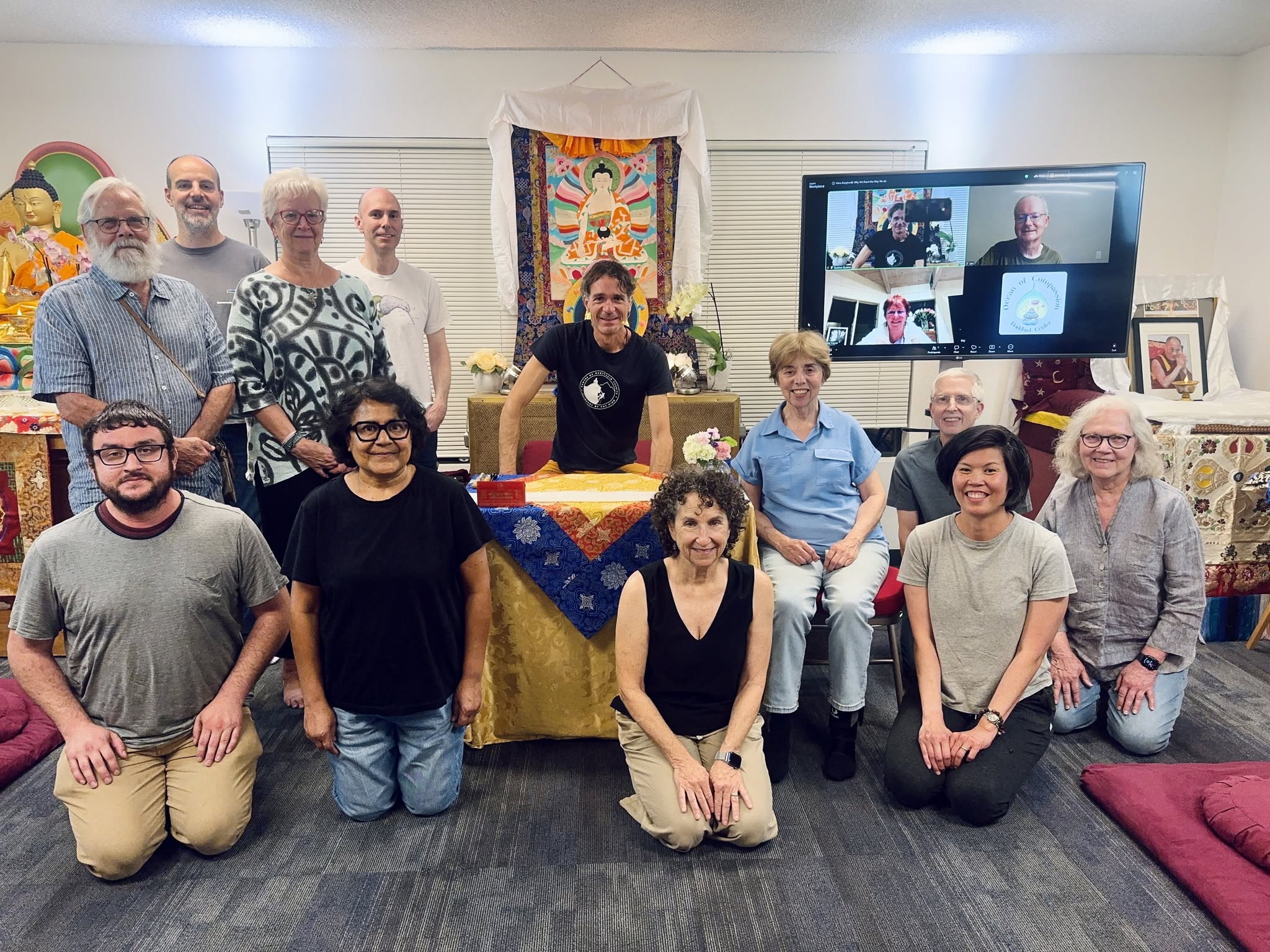
Hans Burghardt taught “Why We React the Way We Do” on August 19 at Ocean of Compassion Buddhist Center in Campbell, California.
Photo credit: Ocean of Compassion Buddhist Center Facebook page.
Learning Through an Immersive Retreat
Between fifteen and twenty students attended the retreat at Vajrapani Institute, around seven of whom were candidates to become Buddhist Mind Science facilitators. The Vajrapani retreat was the second time the complete seven-module course had been offered as an immersive retreat. The first was at Kopan Monastery in July 2023, with about ninety students.
Topics such as karma, the nature of mind, and emptiness can be challenging, especially for people meeting the Dharma for the first time. Still, Hans and Marina felt at ease with their American students: “We found ourselves very comfortable with the American audiences. We felt somehow at home. People seemed very interested, warm, welcoming, and very wise in their knowledge and their reflections.” Many retreatants were already familiar with some of these key Buddhist ideas through their own reflection and experience.
“Everyone responds differently according to their background, but we found that people were in general very open-minded and had reflected on these topics, or similar ones, before. Of course, it was challenging for some, especially for those who encountered Dharma for the first time, but mostly it seemed that these were not new ideas for them. Though challenging, their open-minded mindset and wish to learn and explore helped a lot.”
The structure of the course also helped: “The fact that the course is meant to be very practical and gradual, with meditations and exercises for reflection in small groups, and the fact that it brings science and psychology together with Dharma knowledge, was also welcomed and helped a lot.” For the teachers, presenting profound Dharma topics in just a few days remains a challenge.
Both Hans and Marina have backgrounds in scientific research. Their experience brings an additional perspective to the way Buddhist Mind Science explores the relationship between contemporary knowledge and Buddhist teachings. The science component can lead to discussion and debate, just as the Dharma component can. “Yes, there is usually some debate around the science part of Buddhist Mind Science, as there is with the Dharma side of it. Altogether, it brings knowledge together from different, yet usually quite concordant, points of view. Also, the students were highly educated, and thus introduced some scientific and psychological knowledge themselves.”
Bridging Science and Buddhism: A Long-Held Wish
Buddhist Mind Science also reflects Lama Yeshe’s vision of Universal Education. Elaine Jackson, one of the founding members of Vajrapani Institute and a Buddhist Mind Science facilitator, recalls Lama Yeshe telling Ven. Connie Miller that he wanted to “put the essential aspect of the philosophy into a scientific language.”
The program also connects with His Holiness the Dalai Lama’s long-standing wish to bring Buddhist wisdom into dialogue with modern science. When Hans presented the completed curriculum to Lama Zopa Rinpoche in Singapore, Rinpoche was delighted. According to Hans, Rinpoche later told Ven. Roger Kunsang that he wanted to show the program to His Holiness, as he felt it fulfilled this vision.
His Holiness the Dalai Lama has also spoken about the value of Buddhist knowledge of the mind and of presenting it from a secular approach. In his letter to the 2025 CPMT Summit at Kopan Monastery, he wrote:
“These days there are also growing numbers of people, interested in understanding the workings of the mind and emotions as explained in Buddhist psychology which are both scientific and of practical value. I hope you [FPMT] will be able to provide opportunities for people to learn aspects of Buddhist knowledge purely from a secular approach.”
Hans and Marina share this vision: “That is what Buddhist Mind Science tries to convey.”
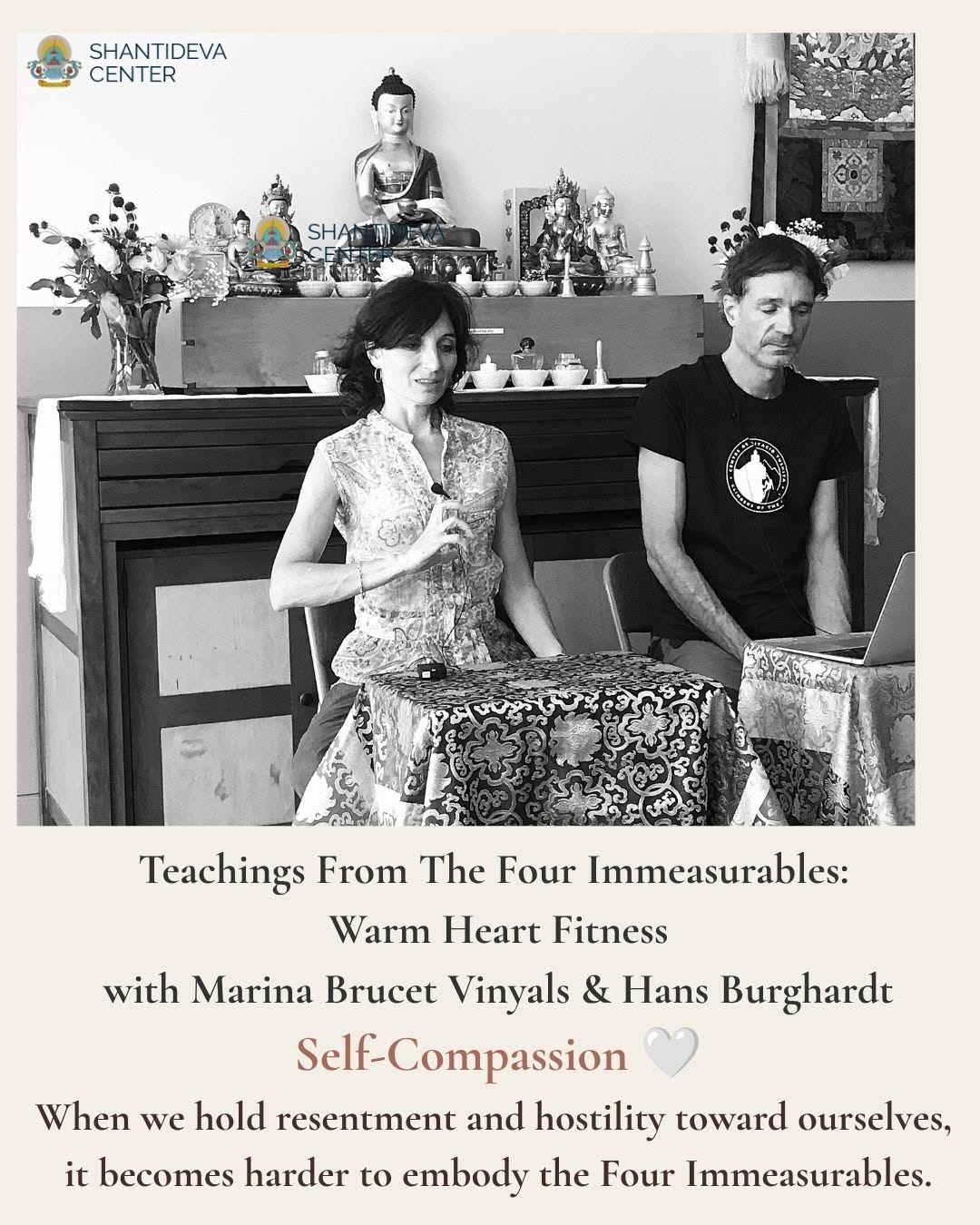
Hans Burghardt and Marina Brucet at Shantideva Center in New York. Photo credit: Shantideva Center Facebook page.
Sharing Buddhist Mind Science More Widely
In 2026–2027, Tushita Meditation Center in Spain will offer the complete seven-module course online in Spanish, taught by Hans and Marina.
BMS courses are also running at other FPMT centers, including Buddha House in Australia, taught by Sandy Edwards; Institut Vajra Yogini in France, taught by Josep Manreza Zafra; and Maitreya Instituut Amsterdam in the Netherlands, taught by Annelies van der Heijden.
Following the Vajrapani retreat, more courses are being planned in the United States. Four modules are expected to be taught by Geshe Legtsok in 2027, and Don Handrick is expected to teach some modules at Ksitigarbha Tibetan Buddhist Center in Taos, New Mexico.
Students can also study through the FPMT Online Learning Center. Hans and Marina explain that most students will attend either a center’s in-person or online teachings, or follow the Online Learning Center program. “The Online Learning Center program can be very beneficial for people who don’t have a center nearby, or for people who have already done a Buddhist Mind Science course, or another Dharma course, and want to refresh or go through the topics again.”
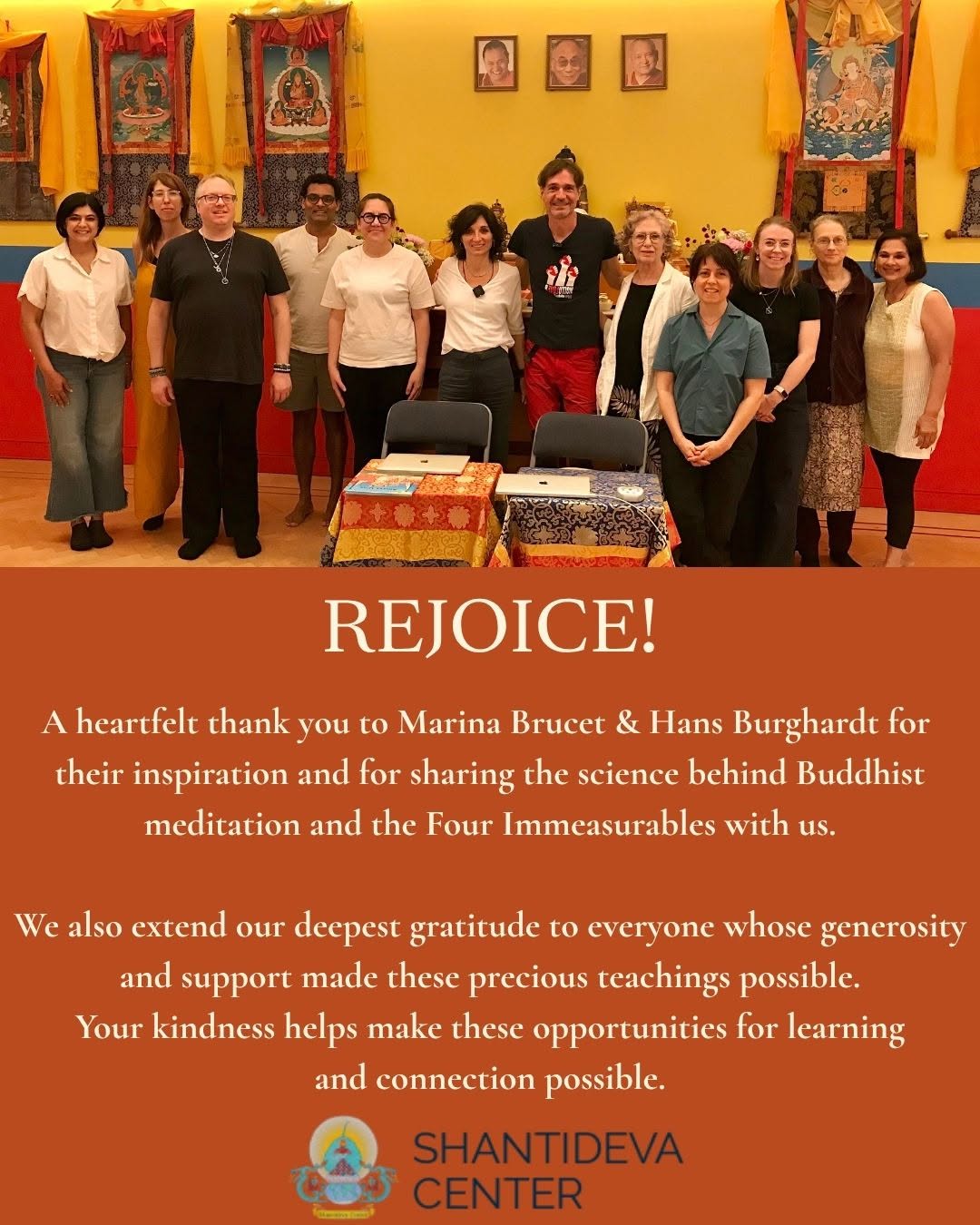
Hans Burghardt and Marina Brucet at Shantideva Center in New York. Photo credit: Shantideva Center Facebook page.
An Invitation to Share the Dharma
“We have put all we have into the Buddhist Mind Science course, and we hope it’s of benefit for many sentient beings. We also hope that it is of benefit for the FPMT centers, to deliver the Dharma in a way that can attract and help more and more students.”
Hans and Marina encourage FPMT centers to offer the course. “We would encourage it! It’s not complicated! If you have someone at the center who has knowledge of the Dharma and a willingness to share it, even if that person is not an FPMT registered teacher, they can become a Buddhist Mind Science facilitator. It is not complicated! It has been designed to help both facilitators and centers, with a lot of flexibility.”
Appointed facilitators complete the seven modules and an orientation session. Registered FPMT teachers can teach the course after completing the orientation and participating in any one module. The BMS course package for centers includes manuals, presentations, guided meditations, facilitator notes, exercises, and quizzes to support its presentation.
With gratitude to Hans and Marina for sharing this story.
To learn more about becoming a facilitator and how centers can offer the program, read Buddhist Mind Science Retreat: An Invitation to Share the Dharma in a Universal Language.
Learn more about Buddhist Mind Science: Activating Your Potential.
You can also explore the Buddhist Mind Science self-paced online course through the FPMT Online Learning Center.
The Foundation for the Preservation of the Mahayana Tradition (FPMT) is a Tibetan Buddhist organization dedicated to the transmission of the Mahayana Buddhist tradition and values worldwide through teaching, meditation, and community service.
- Home
- News/Media
- Study & Practice
- About FPMT Education Services
- Latest News
- Programs
- New to Buddhism?
- Buddhist Mind Science: Activating Your Potential
- Heart Advice for Death and Dying
- Discovering Buddhism
- Living in the Path
- Exploring Buddhism
- FPMT Basic Program
- FPMT Masters Program
- FPMT In-Depth Meditation Training
- Maitripa College
- Lotsawa Rinchen Zangpo Translator Program
- Universal Education for Compassion & Wisdom
- Online Learning Center
- Prayers & Practice Materials
- Overview of Prayers & Practices
- Full Catalogue of Prayers & Practice Materials
- Explore Popular Topics
- Benefiting Animals
- Chenrezig Resources
- Death & Dying Resources
- Lama Chopa (Guru Puja)
- Lama Zopa Rinpoche: Compendium of Precious Instructions
- Lama Zopa Rinpoche: Life Practice Advice
- Lama Zopa Rinpoche Practice Series
- Lamrim Resources
- Mantras
- Prayer Book Updates
- Purification Practices
- Sutras
- Thought Transformation (Lojong)
- Audio Materials
- Dharma Dates – Tibetan Calendar
- Translation Services
- Publishing Services
- Ways to Offer Support
- Teachings and Advice
- Find Teachings and Advice
- Lama Zopa Rinpoche Advice Page
- Lama Zopa Rinpoche: Compendium of Precious Instructions
- Lama Zopa Rinpoche Video Teachings
- ༧སྐྱབས་རྗེ་བཟོད་པ་རིན་པོ་ཆེ་མཆོག་ནས་སྩལ་བའི་བཀའ་སློབ་བརྙན་འཕྲིན།
- Podcasts
- Lama Yeshe Wisdom Archive
- Buddhism FAQ
- Dharma for Young People
- Resources on Holy Objects
- Centers
- Affiliates Area
- Teachers
- Projects
- Support
- FPMT
- Shop
Translate*
*powered by Google TranslateTranslation of pages on fpmt.org is performed by Google Translate, a third party service which FPMT has no control over. The service provides automated computer translations that are only an approximation of the websites' original content. The translations should not be considered exact and only used as a rough guide.Try to eliminate the negative attitudes, which bring suffering, and increase the positive attitudes, which bring happiness.