 receive our newsletters
 join Friends of FPMT
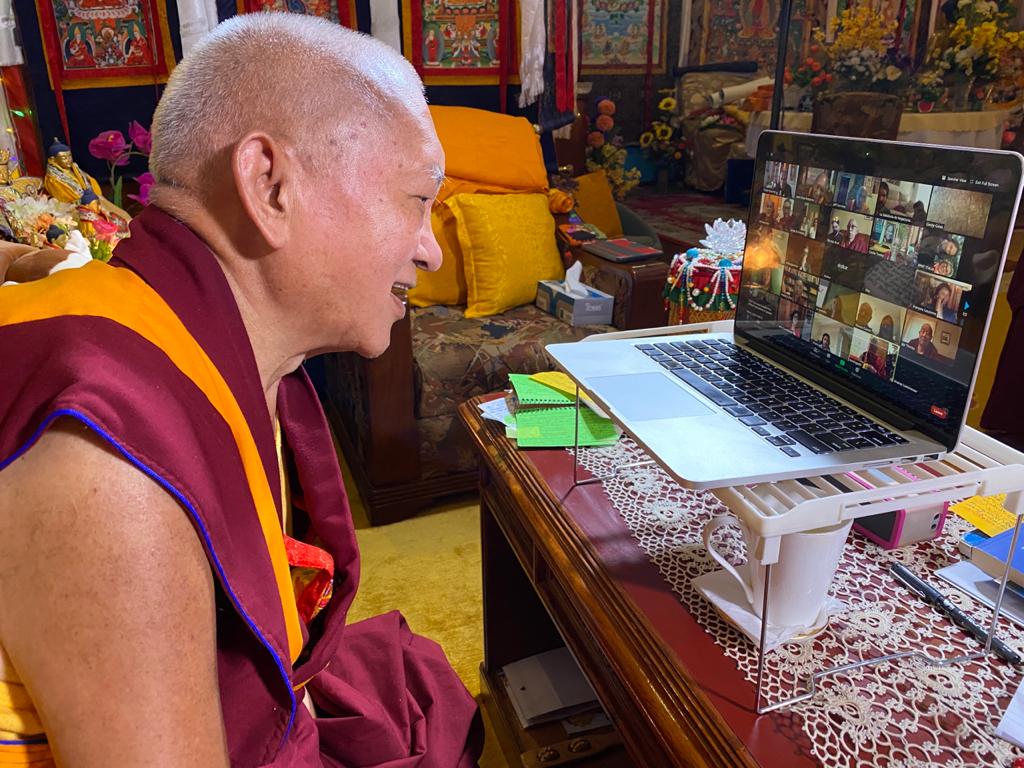
As FPMT marks its 50th anniversary, we have been honored to share the important history of FPMT’s early students. Here Ven. Thubten Chokyi, Director of IMI (International Mahayana Institute) in conversation with Ani Karin Valham, goes through her road to Kopan that lead her to the Dharma and to 51 years of ordination! We rejoice for this inspiring example!

Lama Yeshe and ANi Karin at the 11th Meditation course, 1978, Kathmandu, Kopan Monastery, Nepal. Photo courtesy of Ven. Karin Valham.
Thubten Chokyi: As FPMT celebrates 50 years, it’s truly a delight to have this precious opportunity to hear from Ani Karin Valham, who was ordained at Kopan in 1975 and stayed. So, Ani Karin, thank you for agreeing to share a glimpse of your personal biography and a few highlights from your journey in ordination, drawing on your vast wisdom and experience. First of all, Ani Karin, can you talk a little bit about what brought you to the Dharma? I believe you were traveling, and you ended up in Sri Lanka, and the guy at the photo shop suggested you go to Kopan because you were interested in meditation. So how did that happen?
Ani Karin: Yes, it’s, of course, a long story, but it doesn’t have to be so long. Let me just start from when I was in Sweden. I’m from Stockholm in Sweden. When I was young—18, 19 years old—finishing school, I had no idea what to do with my life. Not the faintest idea.
But slowly, gradually, I gravitated towards wanting to do some social work. I always felt happier with people, you know, and doing something for people, even if it’s just small. My mother didn’t think I was going to be very studious in my life, so she suggested I become a secretary. That was the limit of what she thought I could manage. Since I had no idea myself at all, I just went along with it and went for two-year training as a secretary. I have much use for that training, actually, though I never became a secretary.
I got a good job afterwards and saved up some money for traveling, because I was always into traveling in my free time to look at new places and meet people. So this time, I thought if I’m going to go for a long education as a social worker, I need to take a break first.
That break took me to Sri Lanka. I was going to travel for 6 months, then go back and go to school—I promised my parents. I had no particular aim; I just liked to travel around from place to place. There were no mobiles, no internet—nothing. You were completely on your own if you went somewhere where they weren’t used to tourists.
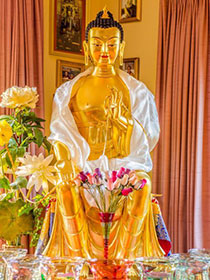
Somehow, I spent time there and came across my first Buddha statue—a beautiful, smiling Buddha statue. I got really impressed by that and started to wonder what he actually taught. In Sweden, we were not religious people, so you hardly ever had contact with Buddhism in those days back in ’73.
I traveled around there, then went to India and up to Darjeeling, where I also met Buddhists and drank my first Tibetan tea. Then I went slowly, gradually to Thailand, and again—Buddhists! I was surrounded by Buddhist people wherever I went for some reason.
Then I went down to Indonesia; that was my end station. There, I visited the most beautiful temple in Borobudur. They were restoring it, so we couldn’t go out there normally, but after some time we managed to talk them into giving us permission. We went out there three times, and every time, sitting on top meditating was so special. You really felt you were in the presence of the Buddha, and there I decided I must learn to meditate properly in order to see what the Buddha really taught.
From then on, wherever I went, I was looking for teachings. Eventually, I came to Northern Thailand, in Chiang Mai. I was in a monastery, and a German monk there said, “We don’t teach here, so you can’t stay in the monastery. But you may want to go to Nepal; there’s a monastery there that does courses for Westerners.” That was my introduction to Kopan.
He tried to teach me the Wheel of Life and Dependent Arising. I was sort of intrigued, but left with more questions than answers because it’s very complicated when you hear it for the first time.
So I hurried up a little bit to get to Nepal. I didn’t know the exact date the course was going to start, but it so happened that I arrived on the second day—the 2nd of November. It was in Kathmandu that I met the man in the photo shop who also told me about Kopan. Two people actually guided me in that direction. So, yeah, I came to Kopan in ’74, and the rest is history.
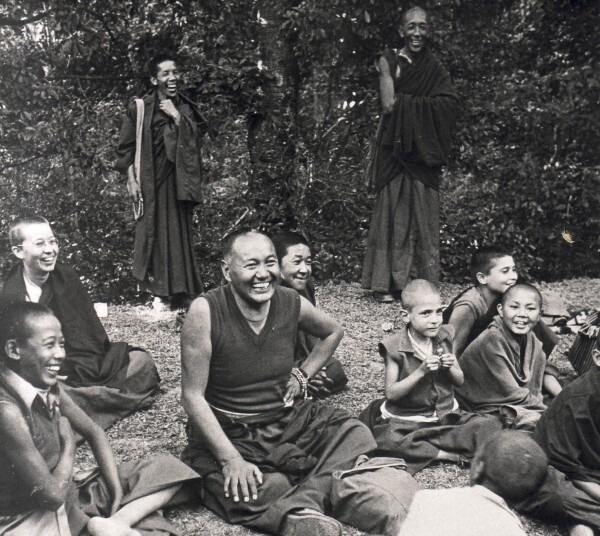
Lama Yeshe with Ven. Karin Valham, Lama Lhundrup, Lama Pasang and Kopan monks at a picnic in Bhalaju, Kathmandu Valley, 1976. Photo courtesy of Ven. Karin Valham.
Thubten Chokyi: So how did it eventuate that you decided to ordain while at Kopan?
Ani Karin: I think that was the easiest decision I ever made in my life. It was the first decision I made that didn’t involve my parents or outside guidance. That was the first time I realized: this is for me.
Lama Zopa Rinpoche was teaching the course sharing his profound wisdom and compassion with us, and Lama Yeshe appeared now and then to teach us how to integrate Buddhas teaching in daily life. It changed my mind completely. Even if I didn’t understand reincarnation or the difficult subjects, the whole atmosphere and the kindness of the Western monks and nuns who were already there, the wonderful teachings completely changed your mind overnight.
I was a very skeptical person, but I couldn’t refute the basic Tenets of Buddhism, even though it was just my first course. After that, I took the November course every year for 5 years. You go deeper and deeper and find a clearer faith in the teachings, that makes a big change. Once those clean seeds start to grow, there’s no limit to what you want to understand, it rolls on by itself
After the course we did a one month lamrim retreat and then Rinpoche gave the eight Mahayana precepts and refuge, as well as a Vajrasattva initiation. I took all of that as it came. I felt it was completely right. I’m not a person who jumps into things spontaneously—I’m a very cautious person—but here, I felt I had come home in terms of the Dharma teachings. I felt so safe and secure.
After that I did a retreat, I had a meeting with Rinpoche that didn’t go very well, because I’m so ignorant! Out of the blue, Rinpoche said, “You have to go home and see your mother.” “Why?” I blurted out! But of course, he was right. I had to go and see my parents to ask for permission to become ordained. So I did that during the summer, came back, and took my first ordination vows. Since then, I’ve felt true happiness.
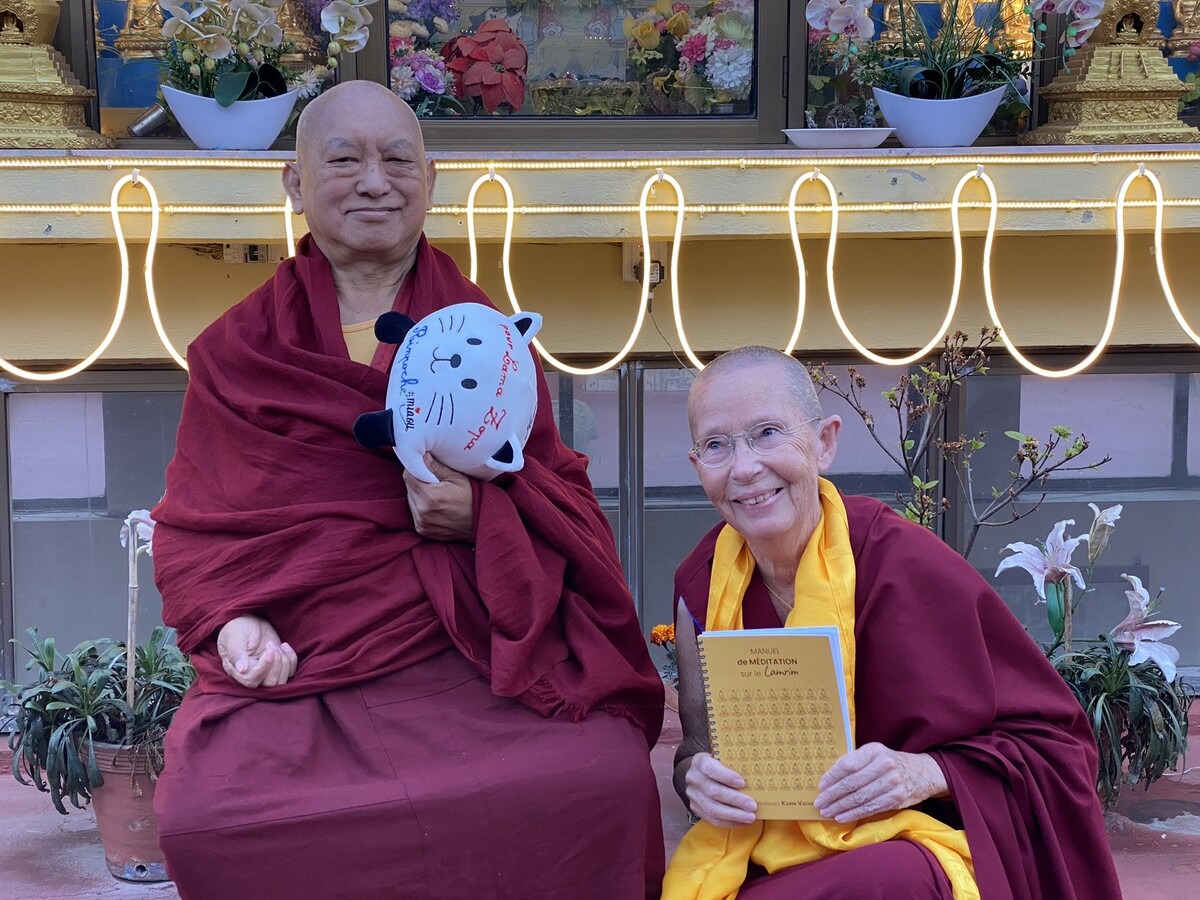
Rinpoche with Ani.Karin with French translation of her book on lam rim, Nepal 2021. Photo by Ven. Roger Kunsang
Thubten Chokyi: What are some of the challenges you faced over the years?
Ani Karin: It was mostly in the beginning—there were a lot of challenges from my own side with attachments. You have to expect that problem when you think about renouncing the eight worldly concerns (eight worldly dharmas). Taking ordination is a sign of renunciation, so you become much more aware of the dangers of attachment, but it’s hard to eliminate. Sometimes you get very emotional or disturbed, I had to change so many habits, and so many things, rather than trying to say something wrong.
After about 2 years, when I overcame that initial phase, I became happier and happier. I still feel very happy about what I did.
Thubten Chokyi: What has sustained you in such longevity of ordination over all these years? What do you think is the key?
Ani Karin: Staying close to the Lamas. I always tried to be where the Lamas were as much as I could manage, I was trying to be close to them.
Also, I always liked all the Sangha. Having gratitude and recognizing that we are supported by the Sangha—and that we are the Sangha—sustains you.
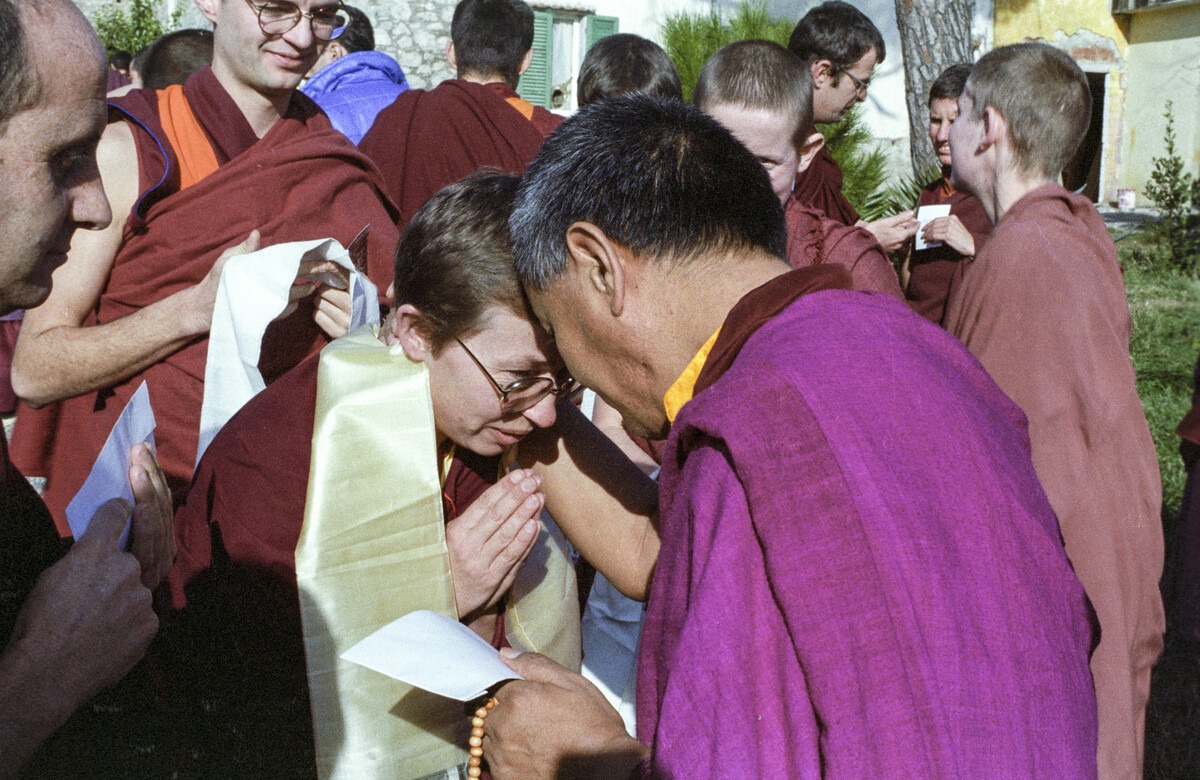
Lama Yeshe and Ani Karin at Istituto Lama Tsongkhapa, Italy, 1983. Photos donated by Merry Colony.
Thubten Chokyi: For Westerners who are thinking about ordination, what are some things you think they need to consider before taking that step?
Ani Karin: Everything is so well-organized now compared to the ’70s! If someone is thinking about ordination, it is a must to go to a pre-ordination course to hear directly from the Sangha what it is really like and what one needs to prepare.
It’s wise to spend at least 3 to 5 years taking basic program teachings, studying, and meditating.
Living in a community is also absolutely essential. Now there are monasteries opening up, like Nalanda, there are a few other smaller ones in different places, as well as Kopan or Dharamsala. Dharamsala is a very inspiring place. Whatever one can manage, it is most important to live in a community and not stay alone by oneself or get lost in the world.
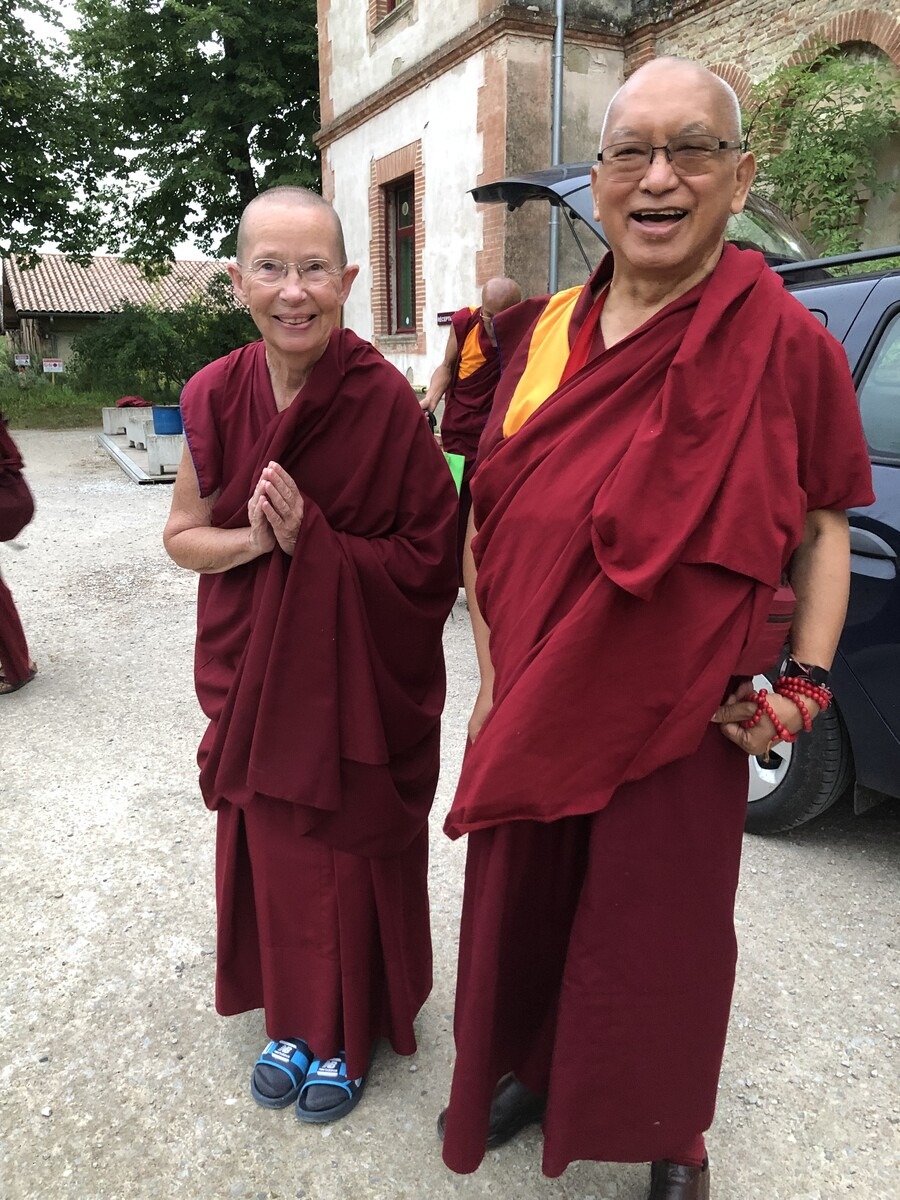
Lama Zopa Rinpoche and Ani Karin Valham, at Insitut Vajra Yogini , France 2019. Photo by Ven. Roger Kunsang.
Thubten Chokyi: Is there any other word of wisdom you’d like to share?
Ani Karin: Lama Yeshe always used to say, “Use your own wisdom, dear.”
Wisdom comes little by little. It is best not to be satisfied with the amount of wisdom we currently have, but to keep growing the inner wisdom. Because people are functioning in different ways, Dharma works in different ways. The more you understand, the more you can benefit others in daily life. Your work in the centers becomes more satisfying the more you have studied and prepared yourself. Whatever it’s in the monastery, or in the centers, or anywhere, the more wisdom you have, in the sense that the more you have studied.
Thubten Chokyi: Wonderful! Thank you so much, Ani Karin. It has been really wonderful to hear your story and share this from the heart.
Ani Karin: Thank you! Bye-bye
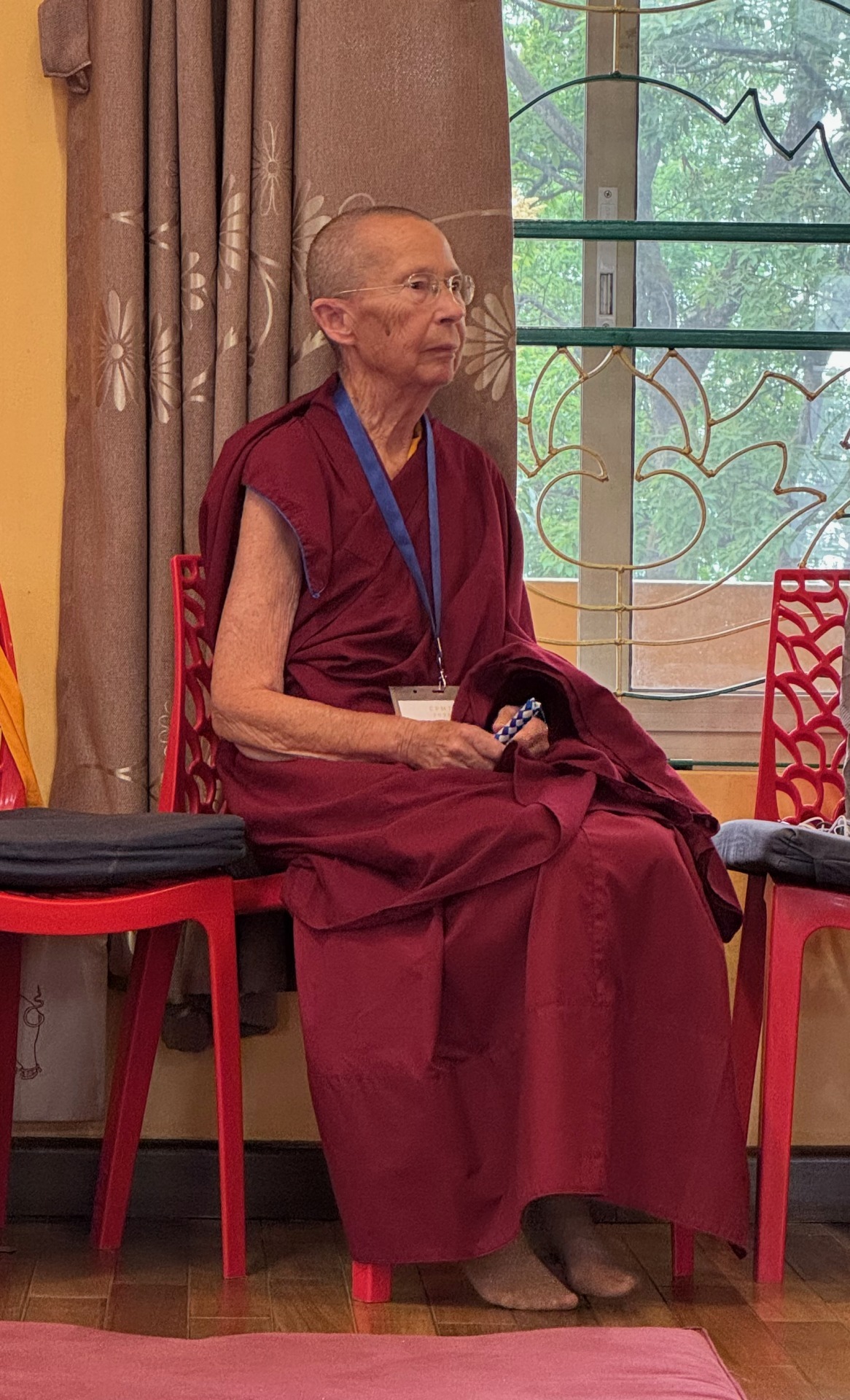
Ani Karin during the 2025 CPMT at Kopan monastery, Nepal.
With grateful thanks to Ven. Thubten Chokyi for conducting this interview and to Ani Karin for graciously sharing her story! Please read her original Road to Kopan story published in Mandala in 2012, “She is Not Looking for Another Man.”
Are you an early student of FPMT who was there at the beginning? Do you have a story to share about how you met Lama Yeshe or Lama Zopa Rinpoche or the impact they have had on your life? Have you personally achieved or actualized a request, advice, practice accomplishment, or project given to you by Lama Yeshe or Lama Zopa Rinpoche? We want to hear from you!
Please explore all of the resources we have compiled related to FPMT history. We look forward to all of your creative ideas on how to bring this year-long celebration to your own local activities and personal practices! Please use the hashtag #50YearsFPMT in your social media posts so we can all be connected in this way.
Foundation for the Preservation of Mahayana Tradition (FPMT), is a Tibetan Buddhist organization dedicated to the transmission of the Mahayana Buddhist tradition and values worldwide through teaching, meditation and community service.