
 receive our newsletters
 join Friends of FPMT


Mandala
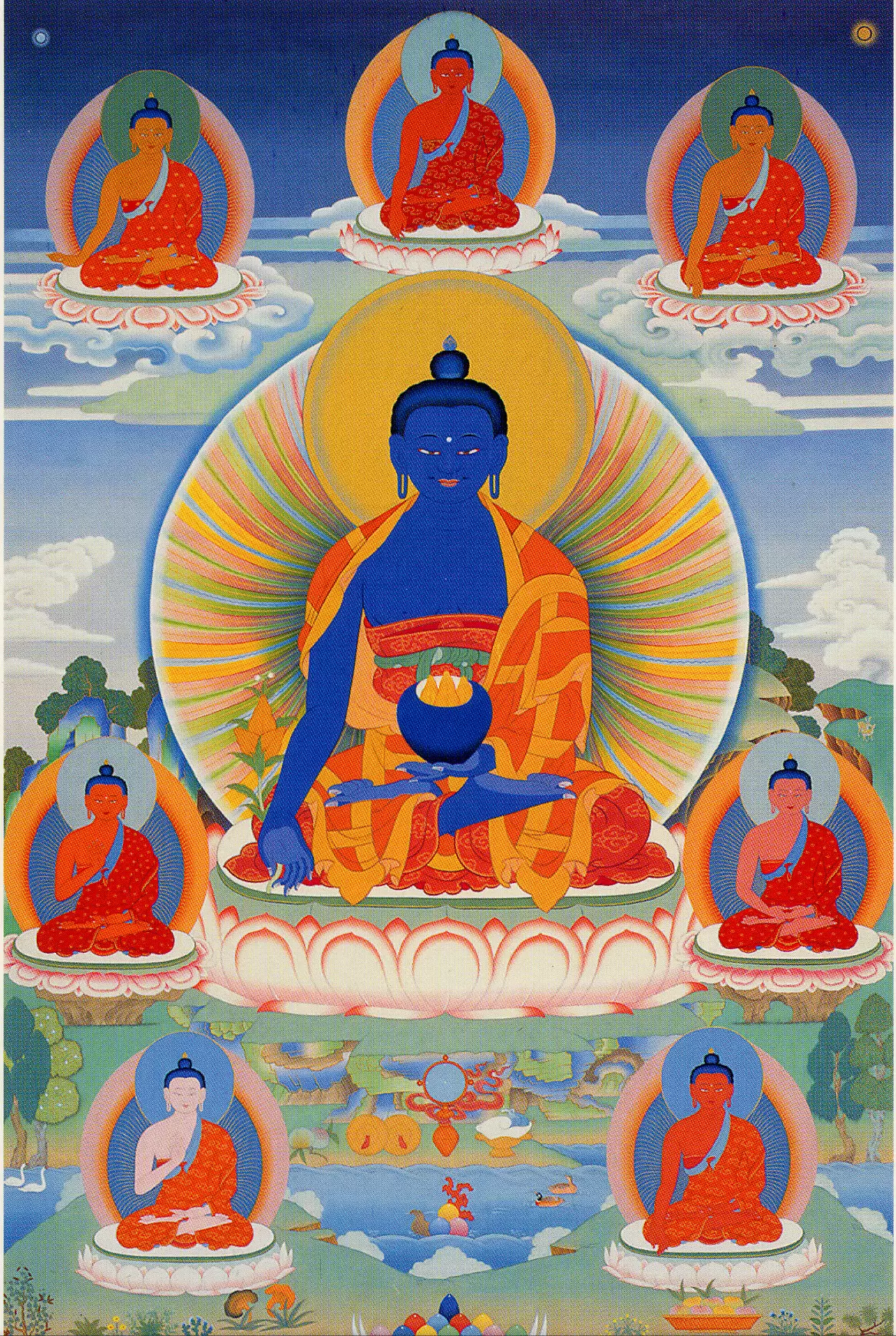
Medicine Buddha thangka by Peter Iseli
From FPMT International Office and Mandala:
Our hearts and prayers go out to the victims of the tragedy that occurred on Monday, April 15, at the Boston Marathon.
Lama Zopa Rinpoche always advises to make strong prayers to Medicine Buddha for anyone who is dying, sick, injured, or who has already died from the violence that occurred in Boston and elsewhere.
Please make prayers for the sick and injured to recover. For those who lost their lives in the tragedy, please make prayers for their families and survivors to be blessed by and receive healing from Medicine Buddha. Also, please make prayers for those who have died to be born in a pure land and become enlightened, or to receive a perfect human body, meet with the precious Dharma, receive teachings and to achieve enlightenment as quickly as possible.
Medicine Buddha practice can be done for anyone who is sick, dying or even who has already died. Reciting the mantra of Medicine Buddha is one of the best practices we can do at this time.
The mantra of Medicine Buddha is:
TADYATA OM BHEKHANDZYE BHEKHANDZYE MAHA BHEKHANDZYE (BHEKHANDZYE) RAJA SAMUDGATE SVAHA
You can download a PDF of the Medicine Buddha practice “Wish-Fulfilling Jewel.”
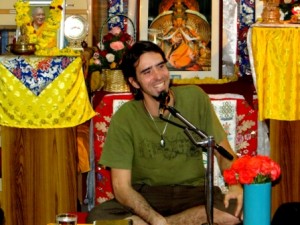
Tenzin Ösel Hita teaching at Choe Khor Sum Ling Study Group, Bangalore, India, February 2013.
Tenzin Ösel Hita’s talk on “How to Understand Our Reality from the Universal Point of View” on February 9, 2013, was a major event at Choe Khor Sum Ling Study Group (CKSL) in Bangalore, India. The audience was not at all discouraged by waiting for one-and-a-half hours while Ösel was battling the bad Bangalore traffic. Ösel, the recognized reincarnation of FPMT founder Lama Yeshe, picked his talk up right from that point, focusing on traffic jams and other stressful features of city life that turn our everyday existence into a real test of endurance.
“To deal with all that, we have to work with the state of our mind. It’s essential to understand how our mind functions. Reality is, after all, created by the mind. Bangalore, the universe, and everything that is man-made – it all starts with a thought. Without that thought at the beginning, nothing is possible. That’s why it is so important to observe our thoughts,” he taught.
Read more …
From Mandala July-September 2013
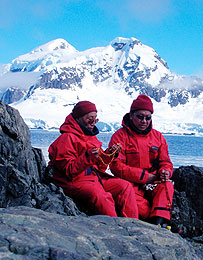
Kirti Tsenshab Rinpoche with Alak Rinpoche in Antarctica, 2006
In the last year of his life, Kirti Tsenshab Rinpoche, who passed away in December 2006, was able to fulfill a long-held wish to visit Antarctica. During the extraordinary journey, Kirti Tsensab Rinpoche and his attendant, Alak Rinpoche, offered countless pujas and blessings.
Bruce Farley described the amazing Antarctic adventure in Mandala October-November 2006:
Why Antarctica? According to Kirti Tsenshab Rinpoche, because it is the most southern pole of the earth, many water currents gather and disperse from Antarctica, finding their way all over the planet. Likewise, many of the world’s weather patterns stem from the southern ocean. Ninety percent of the world’s ice and seventy percent of the world’s fresh water are found in Antarctica. Rinpoche’s wish was to bless these currents with holy water containing blessings from His Holiness the Dalai Lama, as well as water gathered from all the oceans of the world, and from lakes, rivers, etc., visited by Rinpoche over many years. The blessed water also contained sand from many mandalas performed by His Holiness the Dalai Lama, and by Kirti Tsenshab Rinpoche. It is believed that this mixing and unification of water coming from different origins, along with the power of various pujas, can bring about pacification of extreme weather patterns and stabilize and harmonize weather in any place, especially if the weather patterns are disturbed.
Secondly, Rinpoche wished to place a specially-made stone Buddha, carved in Bodhgaya, India, on the Antarctic ocean floor. (This was also done at the tip of South Africa where the Atlantic and Indian Oceans meet, and in Tasman Bay, Nelson, New Zealand.) … Rinpoche says that for as long as these holy forms remain in the water they radiate the blessings of the Buddha. The water that comes in contact with these holy forms becomes blessed, and carries the blessing around the whole of the ocean. Subsequently, whatever comes in contact with that blessed water receives the blessing as well.
Thirdly, [Kirti Tsenshab Rinpoche and Alak Rinpoche] wished to visit Antarctica in order to perform pujas on the actual Antarctic continent.
You can read Bruce’s complete article “Blessing the World’s Waterways” from Mandala October-November 2006 in Mandala’s online archive.
If you like what you read on Mandala, consider becoming a Friend of FPMT, which supports our work.
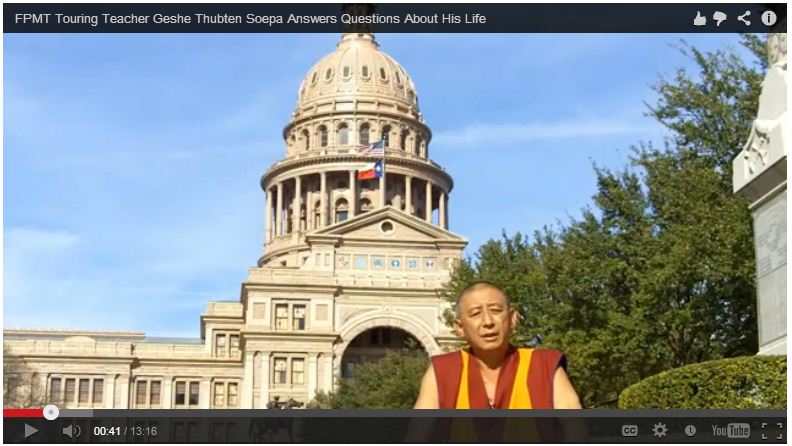
FPMT touring teacher Geshe Thubten Soepa is well known for his advocacy of vegetarianism and is a familiar teacher to students at Land of Compassion and Wisdom in Austin, Texas, United States, and Aryatara Institut in Germany.
In Mandala’s April-June 2013 online edition, we feature an video interview with Geshe Thubten Soepa in which he shares a bit about his background and his deep interest in animal welfare.
If you like what you read on Mandala, consider becoming a Friend of FPMT, which supports our work. Friends of FPMT at the Basic level and higher receive the print magazine Mandala, delivered quarterly to their homes.
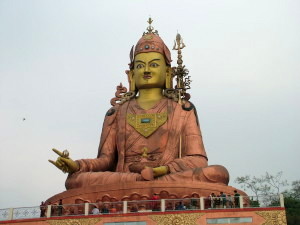
Lama Zopa Rinpoche and students at the large statue of Padmasambhava in Sikkim, India, 2006
Continuing from our latest issue of Mandala’s exploration of pilgrimage, we’re sharing a story, newly added to our archive, that describes a memorable journey with Lama Zopa Rinpoche to a recently created holy site.
In 2006, Rinpoche traveled to Sikkim to visit the world’s largest statue of Padmasambhava [Guru Rinpoche], which was publicly unveiled in 2004 and stands 135 feet (41 meters) tall. Rinpoche was joined by Cherok Lama and several others, including Lillian Too, who at the time was director of Losang Dragpa Centre in Malaysia. She shared an inspiring account of the journey with Mandala.
Lillian wrote:
After lunch that day, we climb to Samdruptse to view the brand new statue of Padmasambhava. This is the highlight of our visit. It is Guru Rinpoche who caused us to come to Sikkim and each one on the journey has a special affinity with Padmasambhava.
The approach to the statue is from the back. A line of people and monks are waiting to greet Rinpoche and to offer khata. I never cease to be amazed at how local people can always smell the presence of Rinpoche wherever he goes. There are also monks from the Sera Je monastery in Gangtok who have motored down to receive Rinpoche. Now they lead Rinpoche up the steps to the front of the statue.
Oh, my! The statue is so awesome.
You can read Lillian’s complete account of the “Journey to Sikkim” from Mandala August-September 2006 as a PDF.
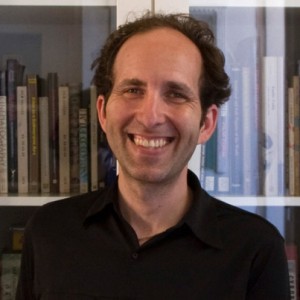
Scott Snibbe
Software developer, digital artist and Dharma student Scott Snibbe just wrapped up leading a month-long online retreat at Vajrapani Institute focused on the eight worldly dharmas. Before the retreat, he spoke with Mandala in an extensive interview ranging from ideas about new avenues for technology to share and spread Dharma to growing up in an artistic Christian Scientist household to his passion for exploring the artistic potential of digital light, motion and color.
“One of the things I really believe that many people thought was contradictory was that computers could be a way to get you closer to nature,” Snibbe said. “Most of those programs that I wrote … are ways of giving people a feeling of nature, something that is like nature, but doesn’t actually exist in our universe. [It’s] the same kind of feeling as sitting on a beach looking at the ocean or watching a sunset, watching ripples in water. There is an essence to nature that is mathematical and algorithmic and also has this infinite range. There is way more of nature, you could think, than what exists in our universe. That is what these programs do. They can take people into that same mental state that nature can take you to. Ven. René [Feusi] once told me a reason why nature is so positive for people. He said, ‘There are no objects of attachment out of nature.’”

Screenshot from “Glass Machine” on REWORK
One of Snibbe’s recent creations is the app album REWORK, which was produced in collaboration with Beck and features remixes of Phillip Glass’ music. “There is one part of the app that lets you make your own music called the ‘Glass Machine,’” Snibbe explained. “It takes the way Philip Glass makes music by putting these two arpeggios against each other and making them play tightly together. You can make these just by pushing little disks around on spidery turntables.”
You can read the complete interview as part of Mandala April-June 2013’s online content.
Scott’s March retreat at Vajrapani was so well received that another combined retreat and online program is already in the works for July 2013. Stay tuned to Vajrapani’s website for more information to come.
If you like what you read on Mandala, consider becoming a Friend of FPMT, which supports our work. Friends of FPMT at the Basic level and higher receive the print magazine Mandala, delivered quarterly to their homes.
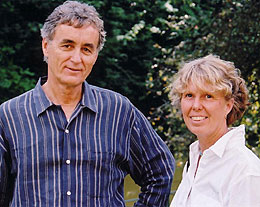
Elaine Brook (right) with physicist Fritjof Capra, adviser on ecological issues
“Now that environmental issues, and climate change in particular, have become headlines in the mainstream media, the question that arises for us all is how to address issues of universal responsibility,” wrote author and photographer Elaine Brooks in Mandala October-November 2006. “For Buddhists, the question is not only ‘Is this something that is relevant to our practice?’ but also, ‘If we are following a practice focused on interdependence and compassion, should we be taking a lead, setting an example, or simply waiting for politicians or market forces to push us into action?’”
In her Mandala article, Brooks described how an understanding of universal responsibility and interdependence can change our everyday actions. “Many Buddhists today feel that the core principle of compassion should be more than thoughts, feelings, prayers, meditations, and being kind to the people we meet: It is an ethic that needs to be extended to our ordinary, everyday habits – how we use energy, transport, food, clothing, and so on,” she wrote.
Brooks shared her two favorite quotes from His Holiness the Dalai Lama:
“Buddhism can be explained in terms of two points: first, a deep understanding of the interdependence of all things and events and second, the practice of non-harming, of helping others, that is based on the understanding of the first.”
“Meditation is something that needs to be done twenty-four hours of the day.”
“These few short sentences open a door to a way of life based on constant mindfulness of the interpenetrating chains of events which ripple outwards from our every action and non-action,” she wrote.
Read more from Elaine Brooks’ article “Eco Ethics: Engaging in the Practice of Compassion” from Mandala October-November 2006.
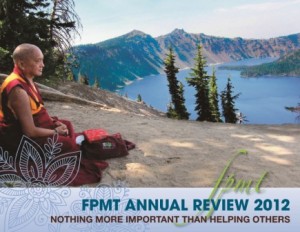
“I really am so happy about the benefits that we bring to others,” Lama Zopa Rinpoche wrote in the opening to FPMT Annual Review 2012: Nothing More Important than Helping Others. Rinpoche continues by thanking the thousands of people who help FPMT and FPMT International Office:
All this benefit is due to your kindness and prayers in the past and the present and because of that it will also be beneficial in the future. This is like a wish-fulfilling jewel removing the darkness of the world, benefiting those that need help. … From my heart, I thank all of you for what you have done in the past and present and for what you will do in the future. Please continue in the future, if possible even better, with your wisdom and compassion.
In addition to Rinpoche’s introductory letter, the FPMT Annual Review 2012 also contains personal letters from Tenzin Ösel Hita (board member and recognized reincarnation of FPMT’s founder, Lama Yeshe) and Ven. Roger Kunsang (president and CEO) to FPMT supporters and students.
The recently published report, created by FPMT International Office, shares its accomplishments over the last year and features beautiful photos, inspiring quotes, and important information about the organization’s financial and structural health. If you are curious about how International Office supports Lama Zopa Rinpoche’s overall spiritual vision, please read over this review, available to read online or as a downloadable PDF.
With more than 160 centers, projects and services around the globe, there is always news on FPMT activities, teachers and events. Mandala hopes to share as many of these timely stories as possible. If you have news you would like to share, please let us know.
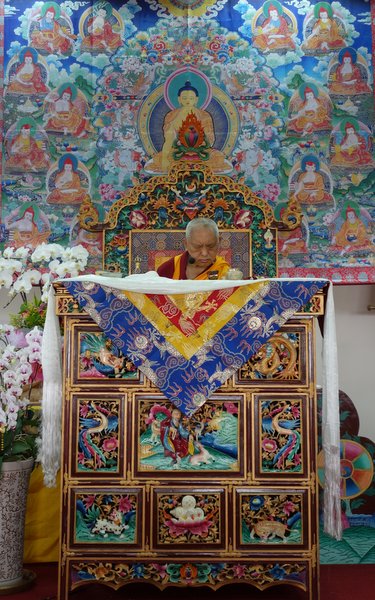
Lama Zopa Rinpoche, Heruka Center, Taiwan, March 2013. Photo by Ven. Roger Kunsang.
Lama Zopa Rinpoche’s Online Advice Book is a collection of a wide range of advices given by Rinpoche to specific students in responses to letters and requests. The Lama Yeshe Wisdom Archive compiles and edits these pieces, adding new ones each month. Mandala offers these excerpts hoping to benefit students and to raise awareness of the Online Advice Book.
From the page “Death of a Loved One,” Lama Zopa Rinpoche writes to a student whose 13-year-old daughter unexpectedly died in bed:
My way of thinking is – so many people in this world went to bed last night but in the morning did not get up, they died. The cause can be natural, or a coma, also unknown, etc. Death does not come when it is expected. Many times, the doctors do not know the cause of death. Many people die who are healthy, who are young, and it doesn’t make sense. Many people who are in perfect health suddenly die. So many people in this world go to bed and in the morning, they are dead, without any pain, just passing away in their sleep, their breath stops. This happens so many times. Actually, you will find it is not unusual for this to happen in this world.
You don’t need to feel superstitious regarding this. This is karma. How long one lives and having an untimely death is caused by karma. Death is definite, it’s not like death won’t happen. When someone dies is not fixed according to one’s age. It’s not like when one is 100 or 50 then one dies. The time of death is not fixed. Whether one has a long or short life all depends on past karma. …
You can read Rinpoche’s complete response to this letter, called “The Cause of a Long Life,” on the “Death of a Loved One” page, part of Lama Zopa Rinpoche’s Online Advice Book.

“I Love My Music!” Photo by Shiv Shankar Menon Palat; Flickr Creative Commons attribution.
Songs. We love songs. And songs are everywhere. They’re played in stores, restaurants, coffeehouses, as soundtracks to movies and TV shows. They’re sung by street musicians and sent to us by friends. We listen as we drive and clean and work and dance. And when you have a mind like mine – conditioned by decades of training in words and music – a single song can stick for a long, long time.
Actually, songs stick longer than we think. If the Buddha’s teachings are true, then everything we put into our minds creates an imprint that shapes the way we think and act, both now and in the future. The words of a song can calm and soothe us, lift us to a higher state of consciousness, rile us up into excitement, or throw us into attachment or despair. The more we listen to a song or songs like it, the more those mental states become ingrained. We begin to believe them, or rather, we reinforce mental states and beliefs from this and previous lifetimes. They become part of who we are, part of how we interact with the world. As Mahatma Gandhi said, “Your beliefs become your thoughts; your thoughts become your words; your words become your actions; your actions become your habits; your habits become your values; your values become your destiny….”
Find columnist Sarah Shifferd’s playlist of songs that “express some positive message or Dharma truth” on fpmt.org/mandala/ …
From Mandala April-June 2013
FPMT News Around the World
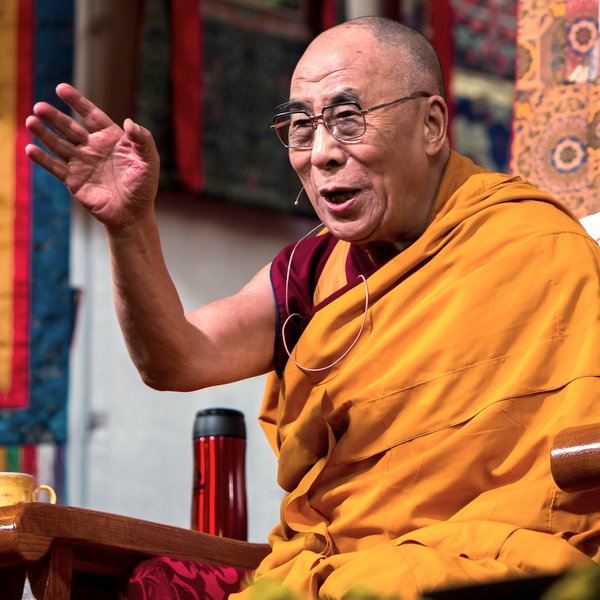
His Holiness the Dalai Lama speaking at Kurukulla Center, Massachusetts, U.S., October 2012. Photo by Kadri Kurgun.
In May 2013, His Holiness the Dalai Lama will participate in an Environmental Summit hosted by Maitripa College in Portland, Oregon, U.S. His Holiness will be joined in panel discussions by religious leaders and politicians to talk about spirituality and the environment and universal responsibility.
His Holiness the Dalai Lama has been advocating publicly for the environment for several decades. In 2006, Mandala reported on the impending climate crisis, a topic that both His Holiness and Lama Zopa Rinpoche have addressed. In 1988, in a speech entitled “Humanity and Ecology,” His Holiness said:
“Peace and the survival of life on earth as we know it are threatened by human activities that lack a commitment to humanitarian values. Destruction of nature and natural resources results from ignorance, greed, and lack of respect for the earth’s living things. … Just as we should cultivate gentle and peaceful relations with our fellow human beings, we should also extend that same kind of attitude toward the natural environment. Morally speaking, we should be concerned for our whole environment. … This, however, is not just a question of morality or ethics, but a question of our own survival. … We must now help people to understand the need for environmental protection. We must teach people to understand the need for environmental protection. We must teach people that conservation directly aids our survival.”
In the article “What Does Al Gore Know that Everyone Should Know?” Mandala shared Lama Zopa Rinpoche’s perspective on the environment. When Rinpoche saw the movie An Inconvenient Truth, Rinpoche commented that former U.S. Vice President Al Gore, who helped create the movie, knows something everyone should know: We are in an environmental decline of global proportions … Action must be taken. Rinpoche said:

People in business who think only of personal profit without consideration for others and the environment are causing great danger to all of us – the country we live in and this whole world.
Al Gore is making us aware of so many things that harm us and our environment. Your happiness depends on others, and others’ happiness depends on you. We all have to live in this world, so we need to be harmonious and happy in a healthy way. No matter who you are or where you are, we all have a responsibility to protect this world.
Maitripa College is the first Buddhist college in the Pacific Northwest and is affiliated with FPMT. Yangsi Rinpoche, Maitripa’s founder and president, extended the invitation to His Holiness to come to Portland and has been closely involved with the development of the summit. Mandala will offer ongoing coverage of the summit and His Holiness’ visit to Portland.
Read more about Buddhism’s environmental roots in “What Does Al Gore Know that Everyone Should Know?” from Mandala October-December 2006.
With more than 160 centers, projects and services around the globe, there is always news on FPMT activities, teachers and events. Mandala hopes to share as many of these timely stories as possible. If you have news you would like to share, please let us know.
It’s not too late to become a Friend of FPMT at the Basic level or higher and receive the April-June 2013 issue, featuring the complete “Skies of Benefit” article!
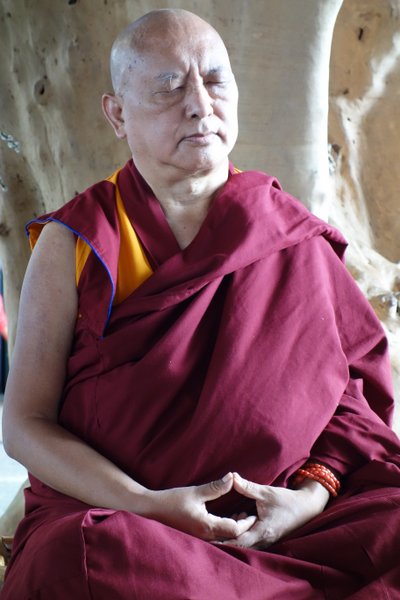
Lama Zopa Rinpoche meditating, Singapore Gardens, March 2013. Photo by Ven. Roger Kunsang.
Lama Zopa Rinpoche’s Online Advice Book is a collection of a wide range of advices given by Rinpoche to specific students in responses to letters and requests. The Lama Yeshe Wisdom Archive compiles and edits these pieces, adding new ones each month. Mandala offers these excerpts hoping to benefit students and to raise awareness of the Online Advice Book.
From the page on “Fears” – A student told Lama Zopa Rinpoche that he was afraid of flying. In response, Rinpoche offered this advice:
Just before departure and during the flight, it is very good to recite the names of the ten directions’ Buddhas. If you keep on reciting the names, in whichever direction you are flying, if you recite that Buddha’s name and pay one-pointed attention to this, not only will you be free from danger, but your wishes will be fulfilled. So not only is this for safe travel, but for the successful fulfillment of whatever goals you had for going in that direction.
It is very good to pray not just for your own safety, but on behalf of all the people in the airplane – all 300 passengers and crew, or however many people there are – for them all to have a safe journey. Not only that, but you can pray that whoever this airplane carries may always be safe. It’s very good to pray like that.
To learn more about Lama Zopa Rinpoche’s Online Advice Book and find more advice, visit the Lama Yeshe Wisdom Archive.