 receive our newsletters
 join Friends of FPMT
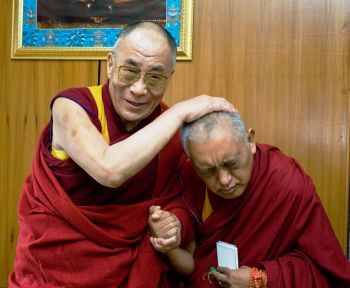

Massimo Corona with Lama Zopa Rinpoche and Lama Yeshe, Nepal, 1972. Photo by LYWA collection.
Massimo Corona was among the first students of Lama Yeshe and Lama Zopa Rinpoche and is one of the pioneers of Tibetan Buddhism in Italy. Over the past five decades, he has helped found Istituto Lama Tzong Khapa, the second FPMT center in the world and the first Italian Buddhist center. He has served in many roles, including founding director of Istituto Lama Tzong Khapa in Pomaia, member of the first FPMT Inc. Board of Directors, executive director of FPMT International Office, publisher of Mandala magazine, director of the Ganden Do Ngag Shedrub Ling, FPMT center in Mongolia, and interim president of ILTK’s board—offering not only his own life but the devotion, labor, and generosity of his entire family.
As a continuation of our yearlong celebration of the FPMT organization turning 50 in December 2025, we are delighted to share Massimo Corona’ s story and images as one of the early students of FPMT! We rejoice in Massimo’s lifelong service and share his story here, largely in his own words.
A Life Offered in Guru Devotion
First Encounter with Lama Yeshe and Lama Zopa Rinpoche
Massimo Corona was born in 1947 and raised in Milan, Italy, into a wealthy family whose fortune came from the fashion industry. As a university student during the student protest uprisings of 1968 that swept through Italy and the wider West, Massimo was drawn into that spirit of searching and questioning. It would prove to be the beginning of a much longer revolution—not a political one, but a Dharma revolution.
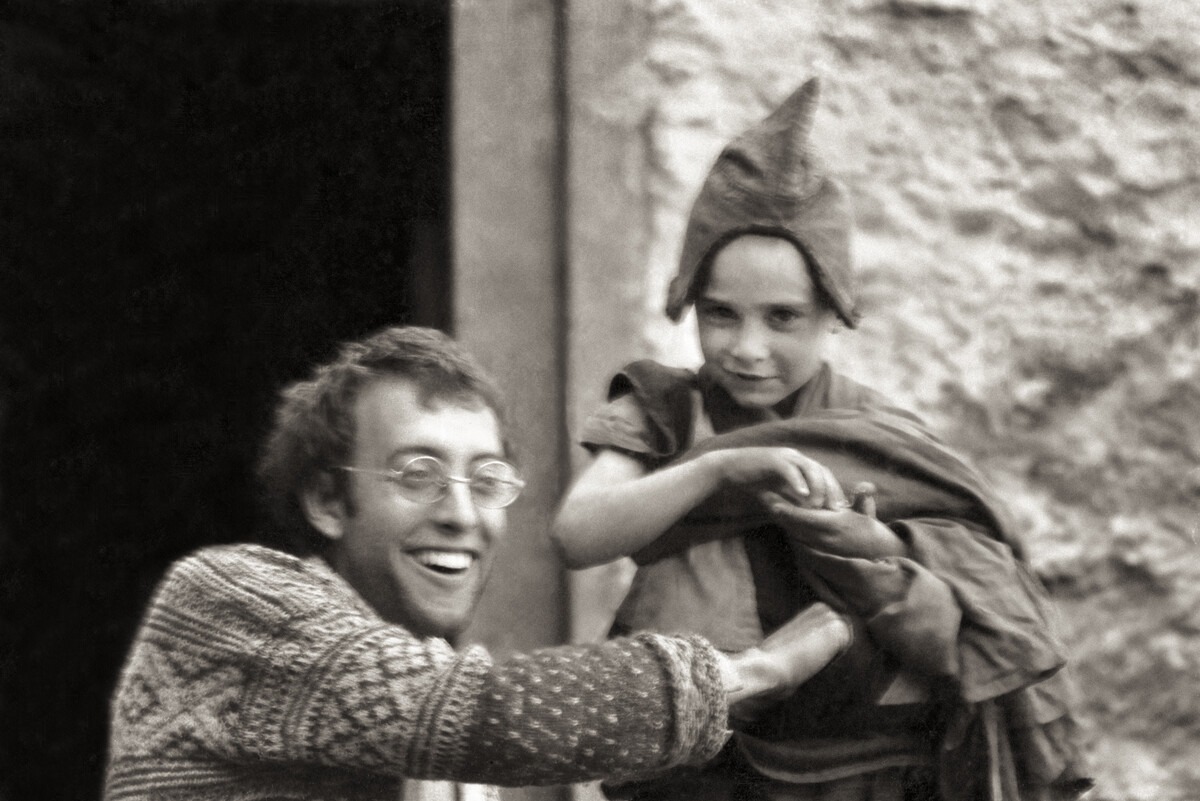
Massimo Corona and Michael Losang Yeshe (Michael Cassapidis). Lawudo Retreat Centre, 1972, Photo by LYWA collection.
After reading about Swami Naryanananda, Massimo decided to travel to India in search of a spiritual teacher. It was April 1971, and he was twenty-three years old. His younger brother, Luca, then sixteen, had also been sent later to India by their parents, who hoped to distance him from the political unrest in which he had become involved. When Luca ran out of money, Massimo traveled to Kathmandu to help him. It was Luca who suggested they visit Kopan Monastery, where his friend Claudio Cipullo was staying. As Massimo approached the old gompa, a poster explaining the Four Noble Truths caught his attention. “This is exactly what I need,” he thought.
It was there that he first met Lama Yeshe.
Listening to Lama teach, Massimo felt as though every word was directed to him personally. “As soon as Lama started talking, I felt it was all about me – about my mind, my problems, my hopes, faults and dreams. I thought, my God, this is my teacher!” He immediately abandoned his plan to travel to Rishikesh to meet the swami and instead remained at Kopan, where Lama Yeshe had begun teaching Western students.
During their first private interview, Lama Yeshe asked if he wished to receive teachings. When Massimo answered yes, Lama replied:” Well, remember, this is not a path for curiosity, this is a path for practice.”
Looking back, Massimo says: “Meeting Lama Yeshe for me was love at first sight. He guided my life, not only through teachings. He taught from his heart, and that was why he touched our hearts. Practically every word Lama Yeshe said had an incredible impact on me. Lama was telling me what to do with my life. I asked him everything. It was a guru-disciple relationship—not just receiving teachings but having a beacon for my life!”
Near Ordination and Life Change of Plans
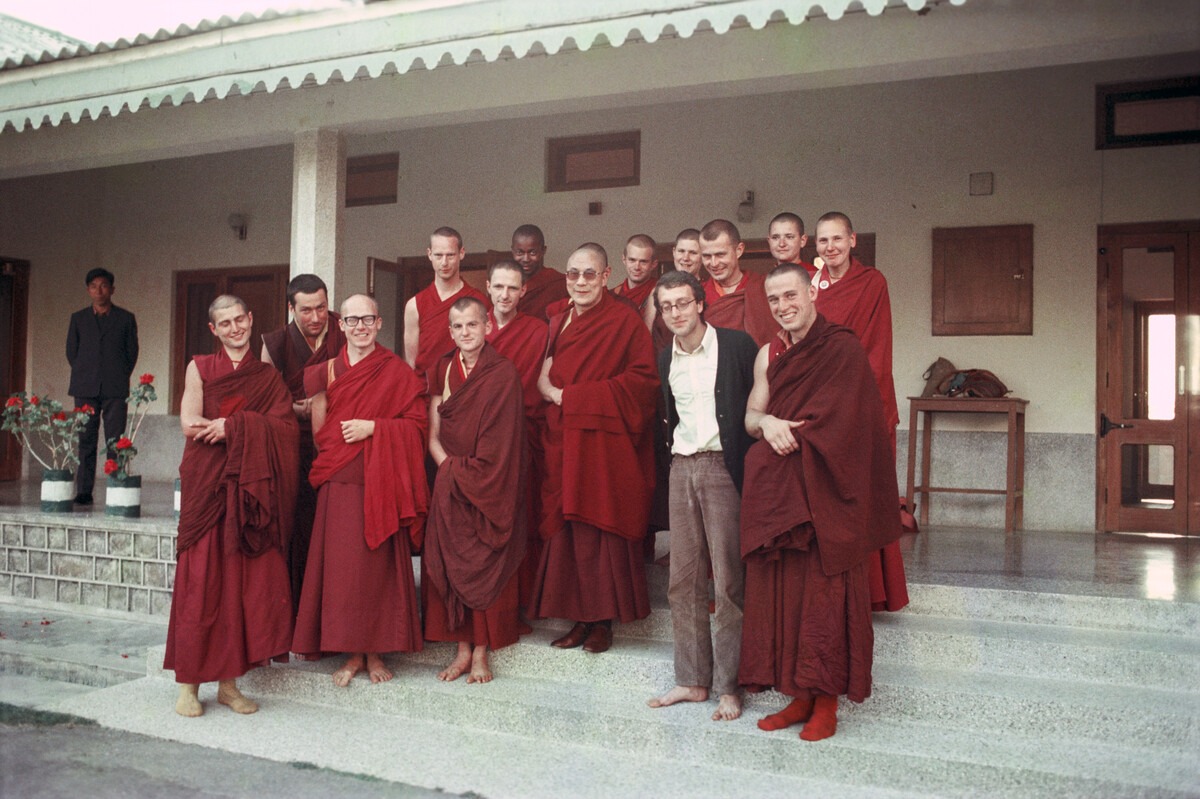
IMI audience with His Holiness, Included in the photo are: Massimo Corona, Bonnie Rothenberg, Chokey Thubten (Debra Spring Livingston), Dieter Kratzer, Gareth Sparham Jampa Sampo (Mark Shaneman), John Feuille, Ordination, Pende Thubten (Jim Dougherty), Piero Cerri (Thubten Donyo), Steve Malasky (Pearl), Ursula Bernis, Yogi (Konchog Jampa). May 1975. Photo by LYWA collection.
Lama Yeshe had set a date in Dharamsala for Massimo’s ordination, to be conducted by Ling Rinpoche alongside the Canadian monk Jampa Sampo. The morning before the ordination, however, Carol—an American woman with whom Massimo had been traveling—arrived and told him that she was pregnant. For several days he struggled with the decision. Too embarrassed to ask Lama Yeshe for advice, he reflected alone before deciding that he could not leave his unborn child without a father. Instead, he chose to remain a lay practitioner and raise his child in the Dharma. On December 23, 1971, their daughter, Maitri Dolma Corona, was born in the American Hospital of Kathmandu. Soon afterward, Massimo carried her to Lama Yeshe for a blessing, bringing with him the finest Darjeeling tea he could find as an offering. During Carol’s pregnancy, they also had the opportunity to meet His Holiness the 14th Dalai Lama for the first time. The audience took place in a small sitting room at his residence in Dharamsala. His Holiness asked Massimo a question that stayed with him throughout his life: “How can you be sure that what you perceive is not a dream?” The question immediately reminded Massimo of something he himself had wondered as an eleven-year-old child, when he had once asked his brother in the dark: “How can we be sure our parents are not a dream?”
The Early Kopan Courses
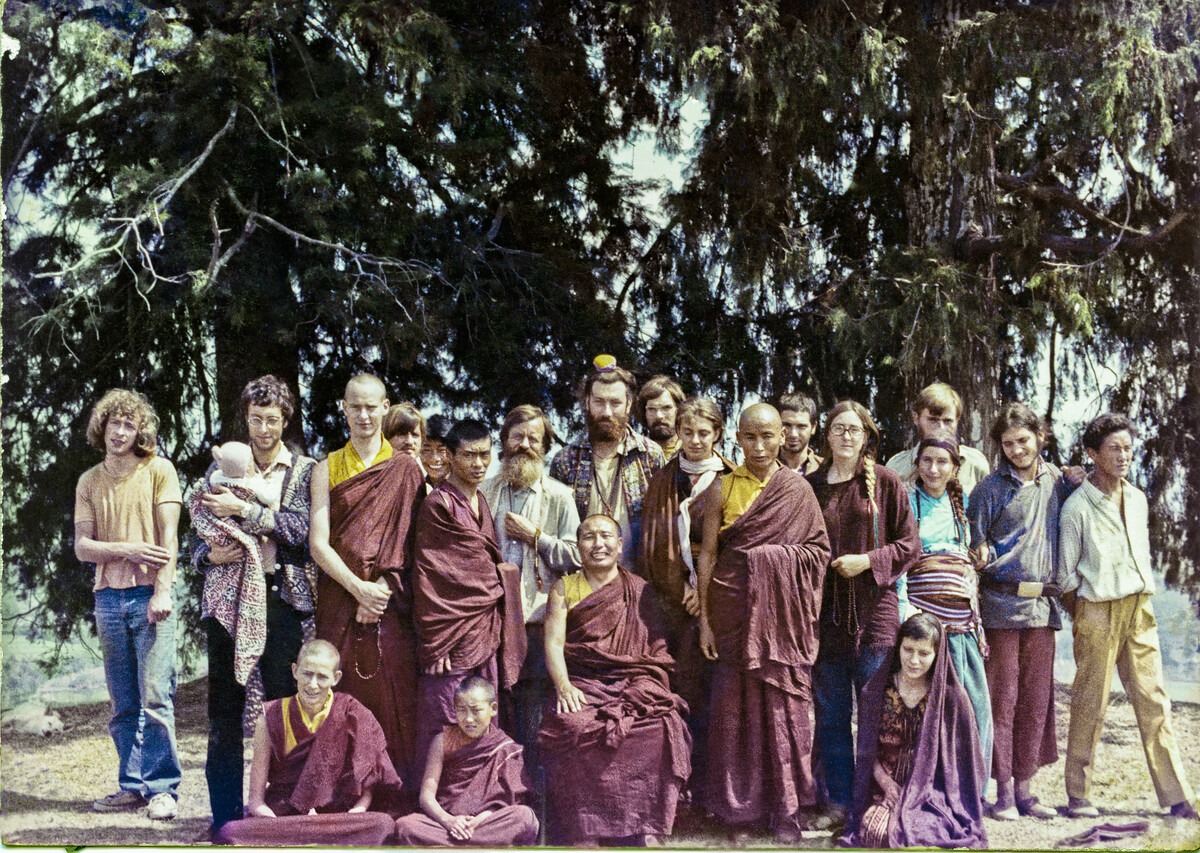
Massimo Corona with the newborn baby Maitri at the second Kopan Meditation Course. Included in the photo are: Ann McNeil (Anila Ann), Mark Shaneman (Jhampa Zangpo), Steve Malasky, Gen Wangyal, Åge Delbanco (Babaji), Peter Kedge, Geshe Thubten Tashi (seated in middle), Losang Nyima, Chris Kolb (Ngawang Chötak), Ron Brooks. Spring 1972. Photo by LYWA collection.
The following year, Massimo attended both the March and November Kopan courses. As a young father with a newborn daughter, he was able to follow Lama Zopa Rinpoche’s teachings more easily than many of the other students because, before the course began, he had spent time with Rinpoche preparing a thirty-page booklet in English to help communicate the teachings. It was the first version of The Wish-Fulfilling Golden Sun of the Mahayana Thought Training teachings from the Kopan Course.
The third Kopan Course brought together around fifty students, many of whom would later become future pillars of FPMT, including Peter Kedge, Marcel Bertels, Nick Ribush, Marie Obst, Claudio Cipullo, Piero Cerri, Luca Corona, among many others, and it was here that Massimo felt that something significant was beginning.
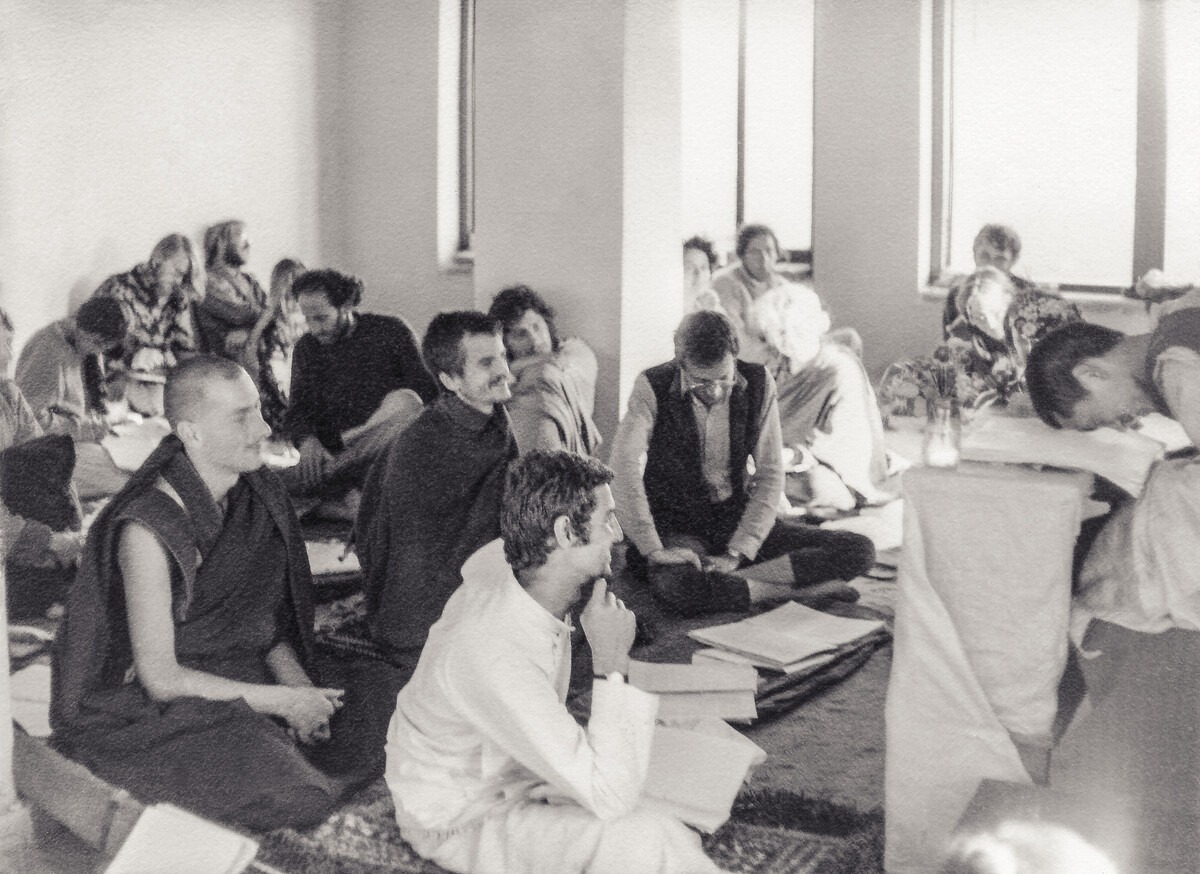
Massimo Corona at the third Kopan Meditation course with Lama Zopa Rinpoche, Piero Cerri, Steve Malasky (Steve Pearl), Nick Ribush. Fall 1972. Photo by LYWA collection.
Over the following months, his connection with Lama Yeshe and Lama Zopa Rinpoche deepened. He accompanied them to Bodhgaya to attend teachings by Kyabje Ling Rinpoche on The Lama Chopa commentary. Later that summer, he traveled to Lawudo, where he helped distribute food to the Lawudo family and began a Vajrasattva retreat in the Lawudo Cave with Lama Zopa Rinpoche.
While staying there, his infant daughter, Maitri, developed bronchitis and a dangerously high fever just as heavy snow cut the family off from the outside world. Massimo eventually found a jar of sulfonamide left behind by a Mount Everest expedition and gave it to her twice a day until the fever finally subsided. Once she had recovered, he carried her on his shoulders all the way down the mountain to Lukla airport in a single day. At the time, the family was living in Ram’s house near Kopan, close to Laxman’s home. One evening Maitri would not stop crying. Desperate, Massimo and Carol carried her to Lama Yeshe. “He looked at her for a few moments then reached over and pulled out a thorn lodged in the back of her knee. She stopped crying immediately.”
During the time in Lawudo, Lama Yeshe invited Massimo to sponsor a tantric puja at Thamo Nunnery. Watching Lama during the ceremony, Massimo felt as though he had become completely motionless. Afterward Lama said “Did you see? During the puja Lama is gone. Lama is not there! One day, dear, you will learn that the real guru is inside you.”
Toward the end of the year, Lama Yeshe held a public examination at Tushita Retreat Centre in Dharamsala. Massimo remembers: “The room was packed—about one hundred and fifty people. Lama called me and the other senior students, including Jon Landaw. Each of us could choose a topic. I was first and chose The Three Principal Aspects of the Path by Je Tsongkhapa. They seemed happy with my presentation. Then Lama Zopa Rinpoche questioned me about emptiness and the self, asking very unusual questions to see whether I had really understood.” Massimo did all right; one student in the room told him afterward, “I’ve just seen the future of a great Dharma teacher.”
Bringing Buddhism to Italy
Massimo Corona, Piero Cerri, and Claudio Cipullo— the “three Italian Musketeers”—were the first Italian students of Lama Yeshe and Lama Zopa Rinpoche. It was Piero who formally invited Lama Yeshe to teach in Italy.
The first meditation course was held in 1975 at a Barnabite fathers’ retreat center in Eupilio, near Como, with Massimo, Carol, Claudio, and Piero arranging accommodation for eighty students. Wilma, Massimo’s mother, came and when introduced to Lama Yeshe, was immediately and warmly greeted by him. She fell completely in love with Lama Yeshe, —a meeting that planted an important seed of support for the years to come.
The following year, Massimo’s second child, Yeshe, was born in Switzerland. Later that year, he helped organize a second lamrim course in Tartavalle, near Taceno, translated by Stefano Piovella. Around this time, Wilma invited Lama Yeshe to stay for two days at the family’s country house near Asti. Massimo’s father, Pino, initially skeptical of Lama Yeshe’s intention, was won over during a private conversation overlooking the family vineyards, in which Lama Yeshe articulated Pino’s own life principles back to him, one by one. “Tell these young people they have to work, that they can mix Dharma with ordinary life. There’s no need for them to abandon.” Moved to tears, Pino pledged his support to create a Dharma center in Italy.
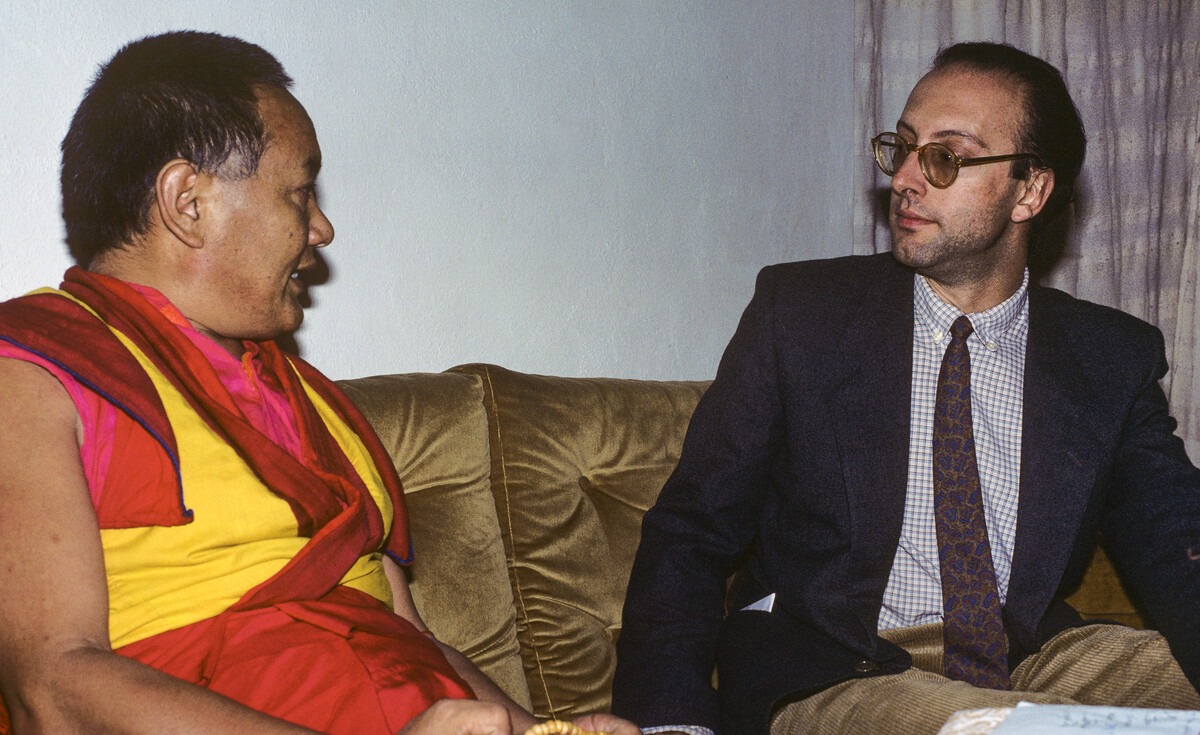
Lama Yeshe with Massimo Corona, Istituto Lama Tzong Khapa, Italy, November, 1982. Photo by LYWA collection.
During the second Italian lamrim course, Lama Yeshe called Massimo, Piero, and Claudio to his room one evening and asked, “Well, are we going to make a center in Italy or not?”
The three enthusiastically agreed. Lama then asked what they should call it: “Atisha? Lama Tsong Khapa? Or what do you like?”
Lama Yeshe then turned to the question of leadership. “Who is going to be the director? We make democratic. We vote. I vote for Massimo. Who do you vote for? And who is the Spiritual Director? I vote for Piero. And we need a secretary—that is Claudio. See how democracy works? It’s very good!”
Lama Yeshe also instructed them to leave their studies of Tibetan debate with Geshe Rabten at the Tibet Institute in Switzerland so they could work directly at the center and support the new students. Although Massimo loved studying debate, he left everything behind and began searching for a suitable location for the center.
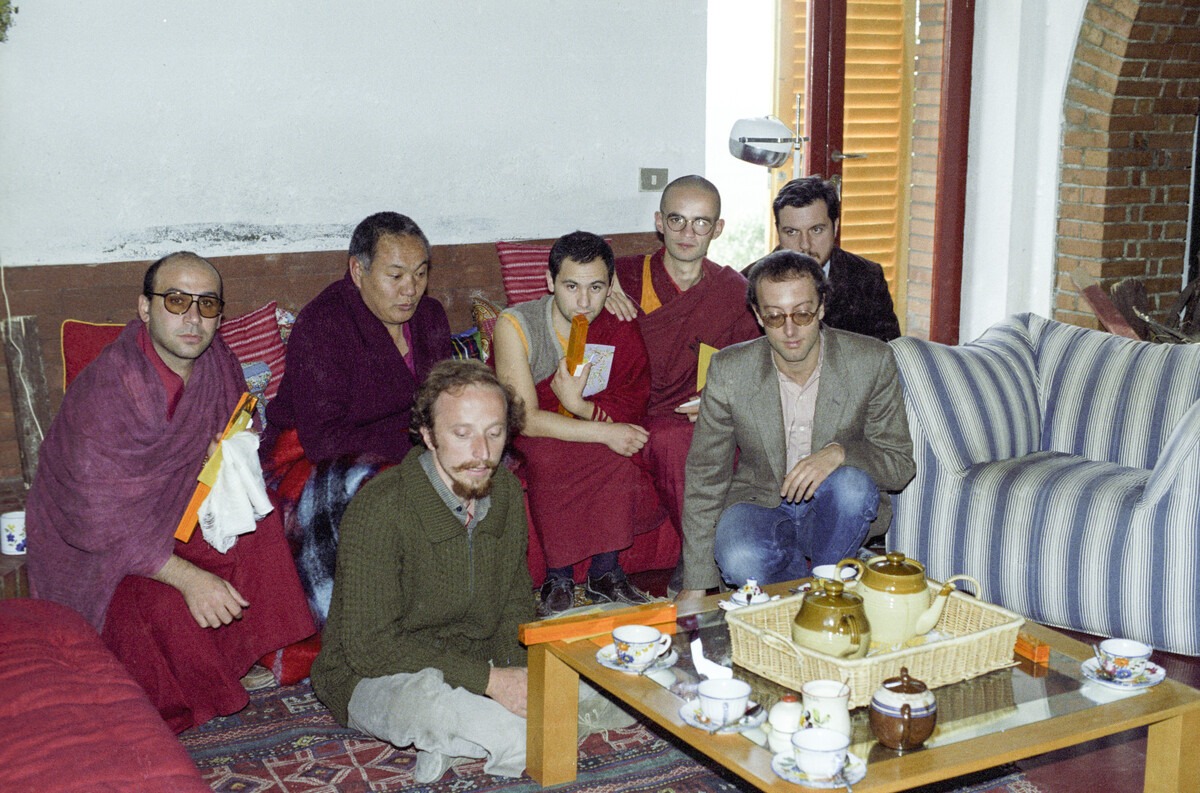
Lama Yeshe and Massimo Corona with the team of Istituto Lama Tzong Khapa. Included in the photo are: Claudio Cipullo, Franchino Morgante, Massimo Andreuzza, Franco Piatt, Claudio Gambirasio. Pomaia 1983. Photo by LYWA collection.
The new Istituto Lama Tzong Khapa was first established in 1976 in a small apartment in Milan while Massimo searched throughout Italy for a permanent home. He placed advertisements in local newspapers and traveled across Veneto, Tuscany, and Umbria, eventually visiting more than one hundred properties. The castle at Pomaia was chosen for its immediate habitability. Massimo sent photographs of the building to Lama Yeshe, who quickly replied, “Perfect. Okay.” The preliminary purchase agreement was signed in April 1977. It was, in every sense, a family offering: Massimo’s father, Pino, gave most of the funds from what would otherwise have been Massimo’s inheritance, while his mother, Wilma, stood among the twelve founding members who registered the center with the Italian government, in December 1976. In April 1977, the first residents moved in, with Massimo the first to sleep in the old castle.
This marked an important milestone in the development of Buddhism in Italy. Although Buddhism had already begun to take root in Italy during the 1960s, the founding of the Lama Tzong Khapa Institute (ILTK) in 1976 marked a turning point, as it became the first permanent Buddhist center in Italy.
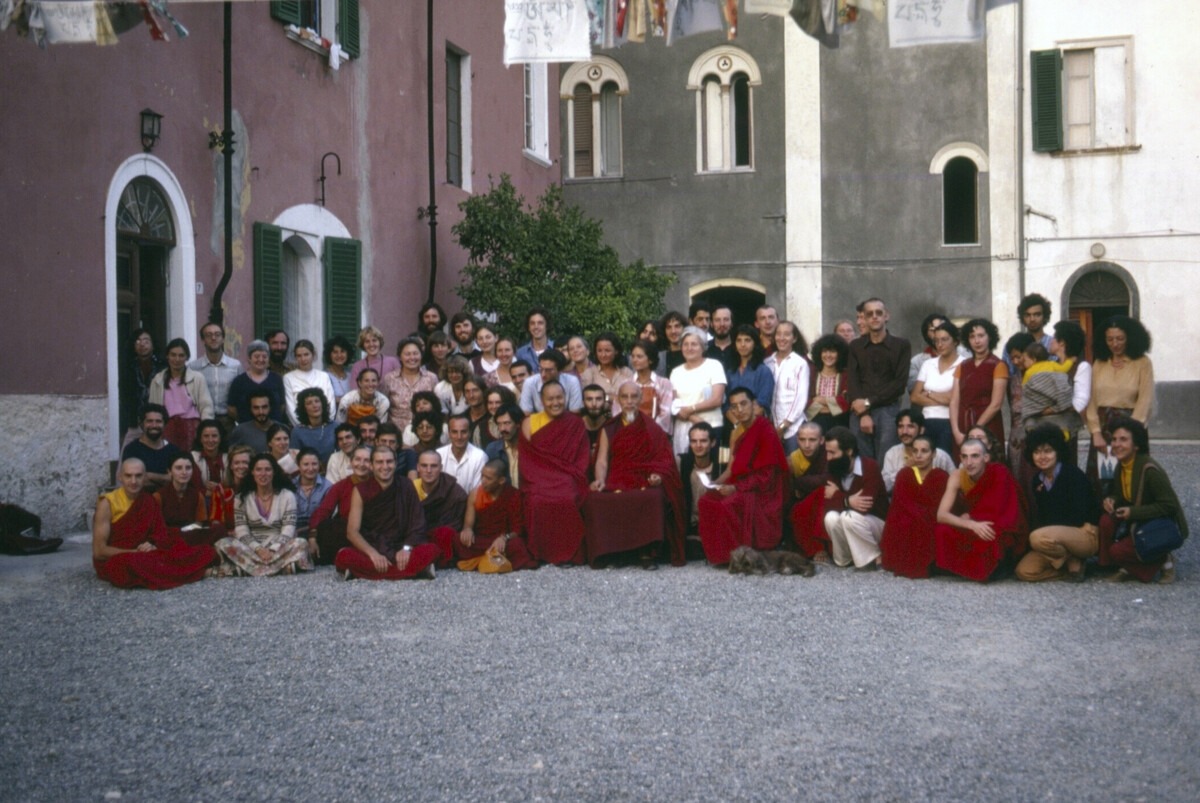
Kyabje Zong Rinpoche, Lama Yeshe and Lama Zopa Rinpoche in the center with the students. Istituto Lama Tzong Khapa, 1978. Photo by LYWA collection.
In September 1977, on his first visit to Pomaia, Lama Yeshe told the community that two things were essential to a center: Dharma, and money—a statement that startled the largely countercultural audience. “He explained that without money, nothing could be accomplished,” Massimo recalled. During the same visit, Lama Zopa Rinpoche taught for ten days on lamrim and thought transformation, and Lama Yeshe gave a ten-day course on the Lama Tsongkhapa Guru Yoga practice. “Why do we need a guru? Because in order to cure our diseased minds, we need the help of someone who knows how to do it. Since it is extremely difficult to understand how the mind works, we need the guidance of an expert in this area.”
As director from 1977, Massimo oversaw the restoration of the building alongside a steady daily routine of practice. By December, the community had grown to fifteen residents, and a management committee was established. During the first three years, more than half the castle was dismantled, only two rooms were livable, and with no proper gompa, the teachings were held in a huge tent in the courtyard.
The lamas continued to visit the Institute every year, at least in the early period. During Massimo’s time, the Institute was incredibly fortunate to host many great teachers, including Kyabje Zong Rinpoche in 1978. This year, Lama Yeshe arrived at ILTK on September 13, a few days after Zong Rinpoche and Lama Zopa Rinpoche. Zong Rinpoche was teaching the lamrim, and Lama Yeshe was to give a course on the fifty-one mental factors, a study of the mind and its functions according to Buddhist psychology. At the end of the teachings, Lama Yeshe had a long meeting with Massimo and the ILTK community: “If there is no Dharma community, people lose contact with each other. So Pomaia has the function of refuge.”
The following year brought another period of intense activity. In July 1979 the lamas arrived at ILTK, where Lama Zopa Rinpoche began teaching a course on the Eight Verses of Thought Transformation. While Geshe Yeshe Tobten had already arrived with Massimo’s younger brother, Luca, who had by then become a monk and was serving as his translator.
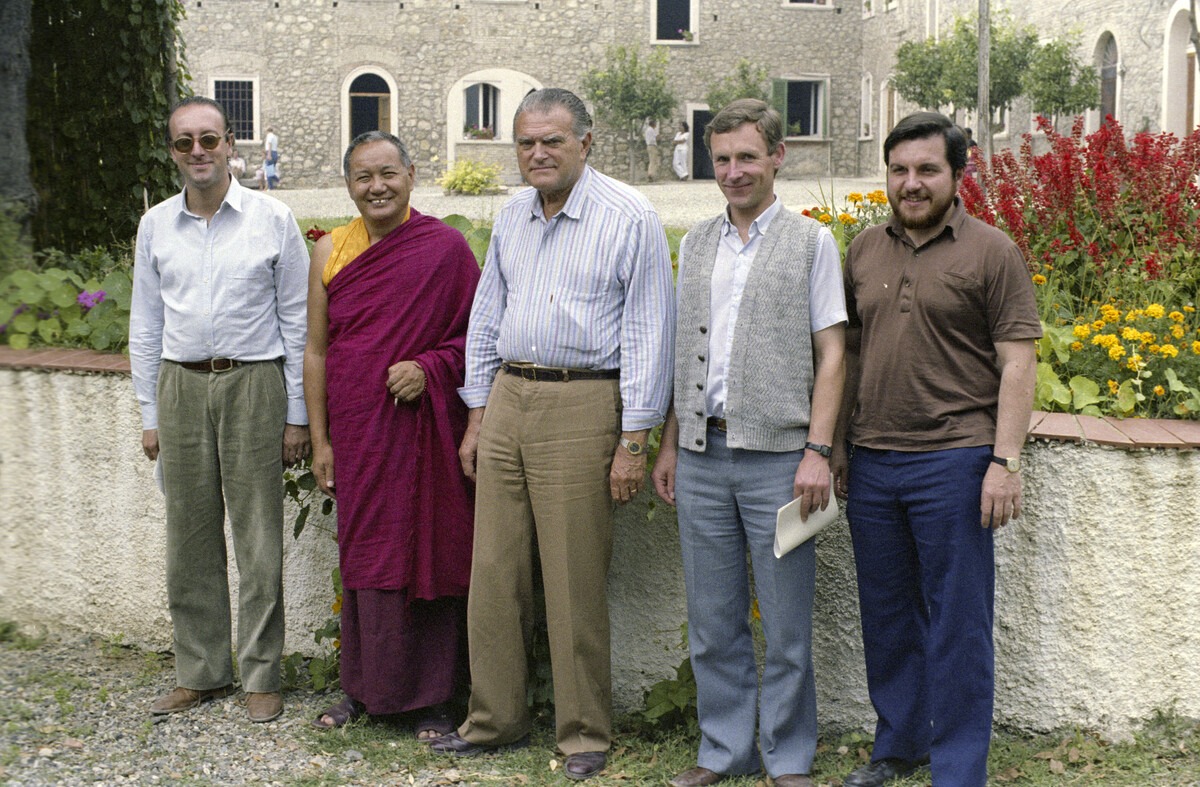
Lama Yeshe with Massimo and Pino Corona, Harvey Horrocks, and Franco Piatti. Istituto Lama Tzong Khapa, 1983. Photo by LYWA collection.
Massimo with the community worked from early morning until late at night preparing for the visits of the lamas. By then the gompa had finally been completed, one dormitory was finished, much of the castle had been restored, and the upper floor of the lamas’ residence was ready for use. During these years the Institute welcomed many eminent teachers, including Serkong Tsenshab Rinpoche, Geshe Jampa Lodro, and Kyabje Ling Rinpoche, who made his only European stop at ILTK to give teachings and a Yamantaka initiation. After several years of intensive work, Massimo stepped down as director in 1980 in order to attend to family matters. When Lama Yeshe asked who should succeed him, Massimo recommended Harvey Horrocks, who became director after Claudio Cipullo had served in the role temporarily.
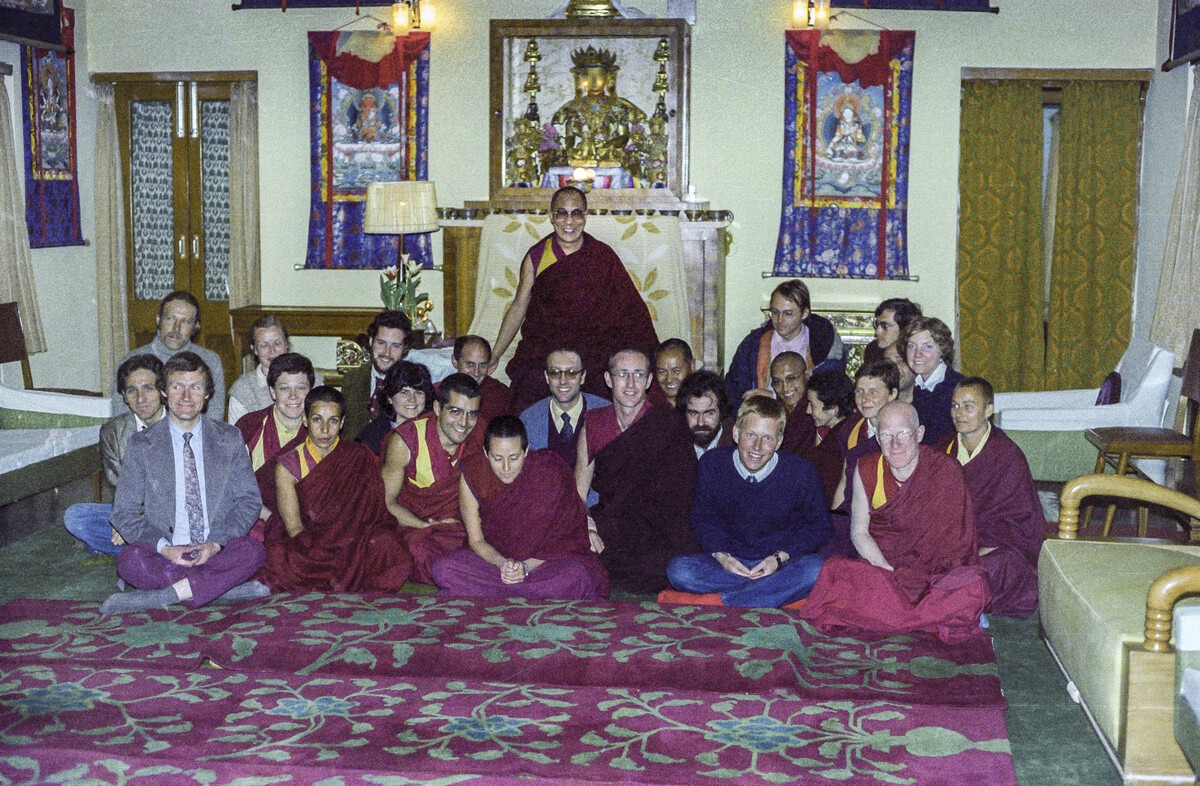
His Holiness the 14th Dalai Lama, with Lama Yeshe, Lama Zopa Rinpoche. Included in the photo are: Massimo Corona, Elisabeth Drukier, Harvey Horrocks, India, JW- Jamyang Wangmo (aka Helly Pelaez or Jampa Chokyi), Jacie Keeley, Nick Ribush, Stefano Piovella, Susanna Parodi Corona, Uldis Balodis, Zia Bassa. Dharamsala 1981. Photo by LYWA collection.
Family Life and Continued Service
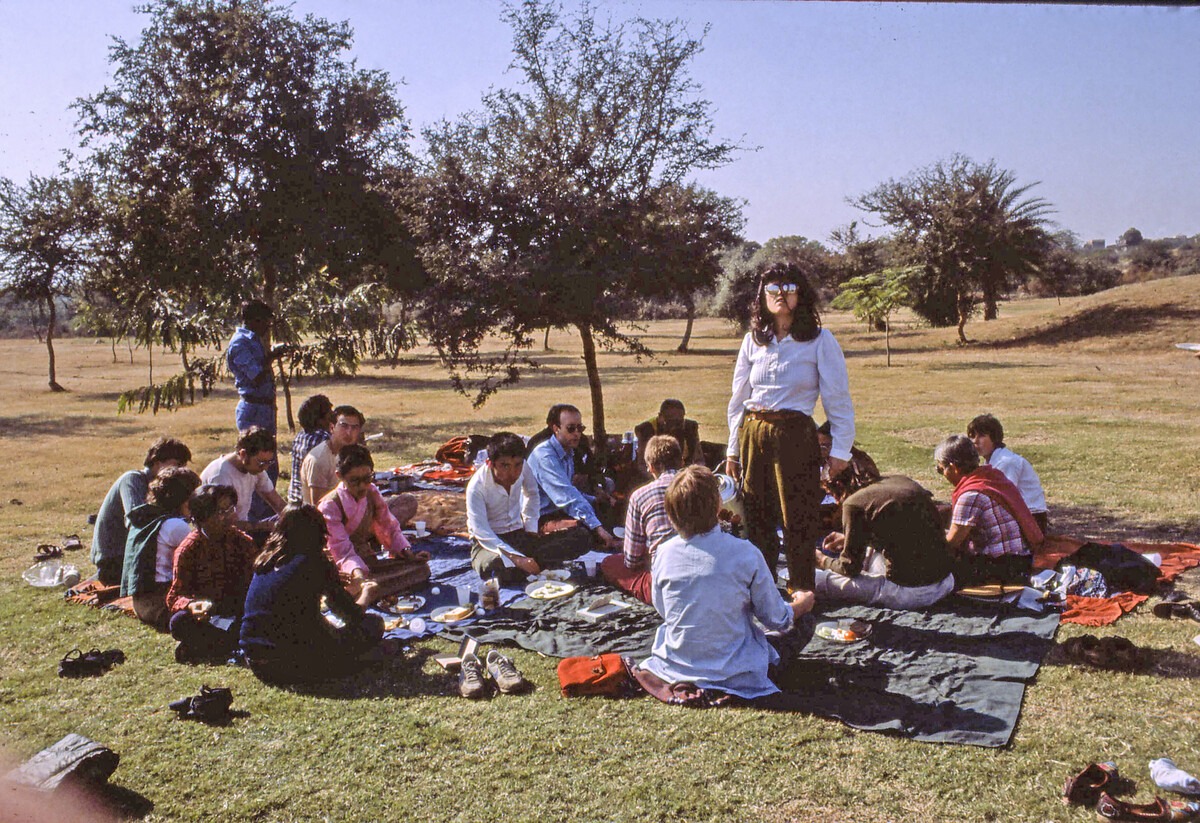
Massimo Corona and Susanna Parodi Corona, New Delhi, 1982, Photo by Greg Moscatt.
Although he had stepped down as director of Istituto Lama Tzong Khapa, Massimo’s service to Lama Yeshe and Lama Zopa Rinpoche continued in many different ways. At the same time, he returned to the family fashion business, directing the Karma fashion house in Milan together with stylist Susanna Parodi, who would later become his wife. Massimo always smiled when recalling how Lama Yeshe had introduced them. One day in 1980, Lama turned to him and said, my daughter Susanna don’t you think is pitty [pretty]? I think she is really pitty!” The following year, while Massimo was interpreting for Lama Yeshe at an international yoga conference in Milan, Lama turned to Susanna and said, “You look after my sponsor!”, referring to Massimo.
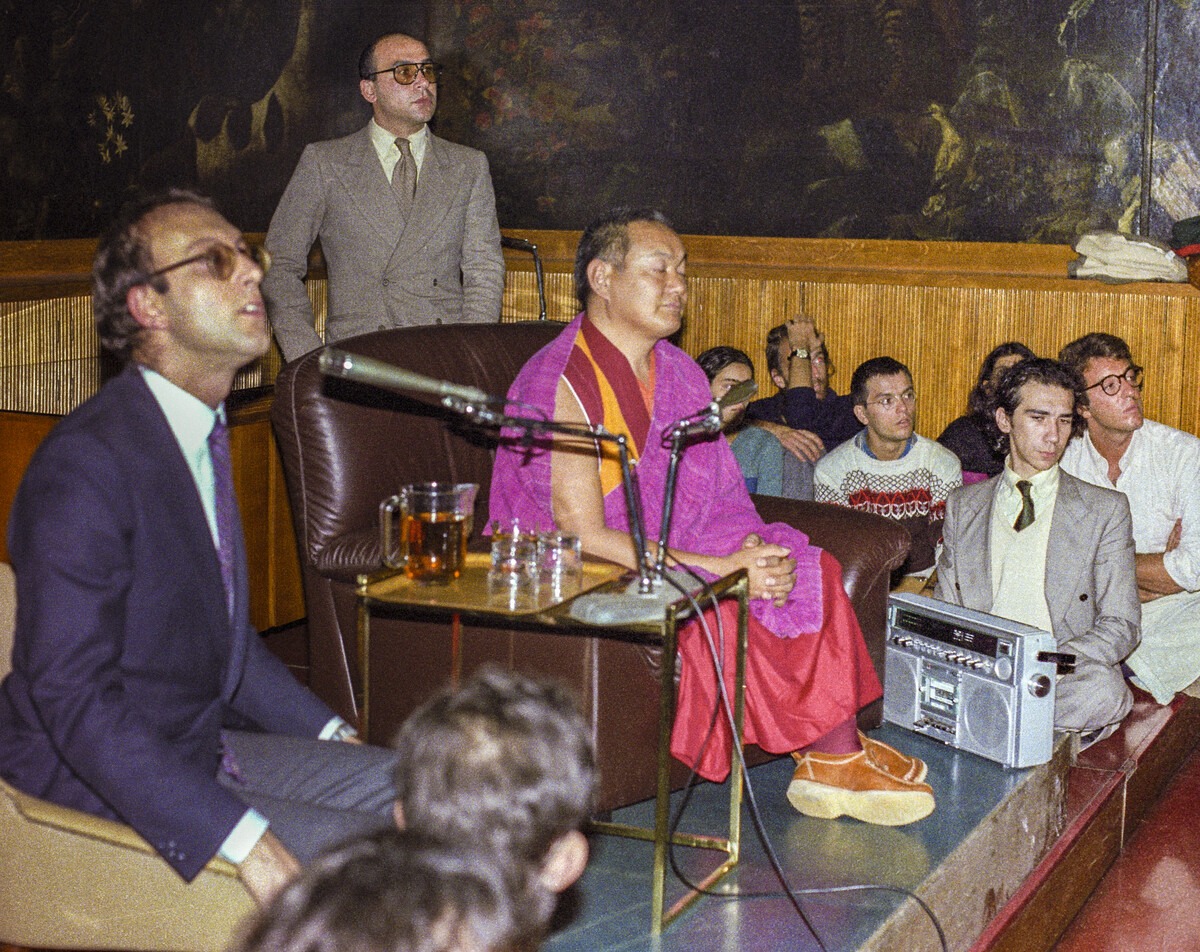
Lama Yeshe and Massimo Corona at the Yoga conference, Milan, 1981, Photo by LYWA collection.
In 1982, Massimo traveled to Tushita Retreat Centre in Dharamsala to receive teachings and empowerments from Kyabje Song Rinpoche. However, a business commitment required him to leave before the teachings had concluded. Soon afterward, Lama Yeshe wrote to him: “[…] You are in my heart making success for all sentient beings. I dedicate your efforts. Thank you so much. And anything I can do from time to time, you let me know.”
That same year ILTK hosted the first visit of His Holiness the 14th Dalai Lama. Lama Yeshe arrived two days before and the community worked tirelessly to get the place ready, ”I can still see the incredible toil of working neck deep in trenches installing sewerage lines under the scorching July sun” said Massimo.
The following year, 1983, Lama Yeshe anticipating his declining health, proposed forming an international board of directors for FPMT so that Lama Zopa Rinpoche would be free to focus on teaching rather than administration. Massimo served on this first FPMT board alongside ten other longtime students.
That September, Lama Yeshe made what would become his final visit to Istituto Lama Tzong Khapa. During the visit he invited Massimo to dinner and insisted on preparing the meal himself. Massimo has never forgotten that evening, “That was the last meal he ever cooked for me.”
Passing of Lama Yeshe
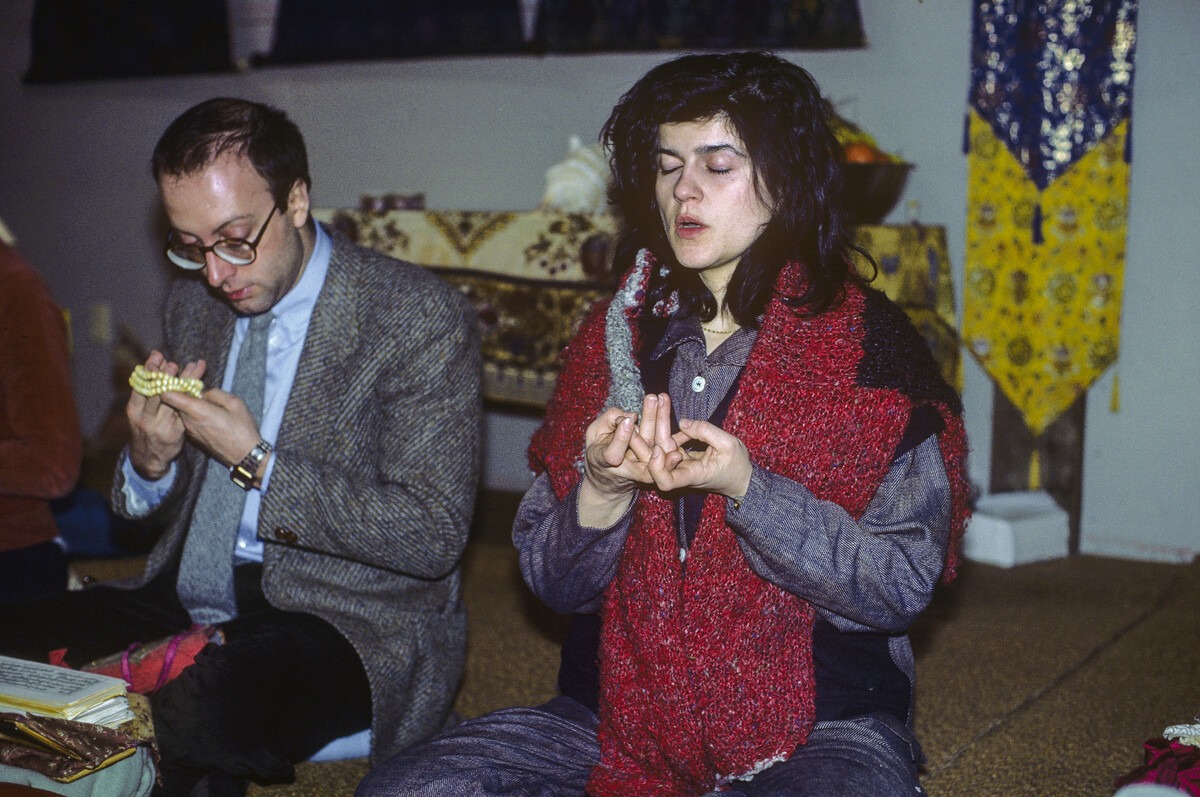
Massimo Corona and Susanna Parodi Corona doing puja for Lama Yeshe, Vajrapani Institute, Boulder Creek, California, March, 1984. Photo by LYWA collection.
In January 1984, during Lama’s final weeks, he invited Massimo and Susanna to Palam, Delhi. “He was in bed with oxygen and his little dogs on the bed. As soon as he saw us he took the tubes out and started crying, so soft and gentle,” said Massimo. “I had never seen him cry before. He told us ‘I know you Italians love me so much, but don’t worry, I’ll never leave you.'”
On March 3, 1984 Lama Yeshe passed away in Los Angeles, USA.
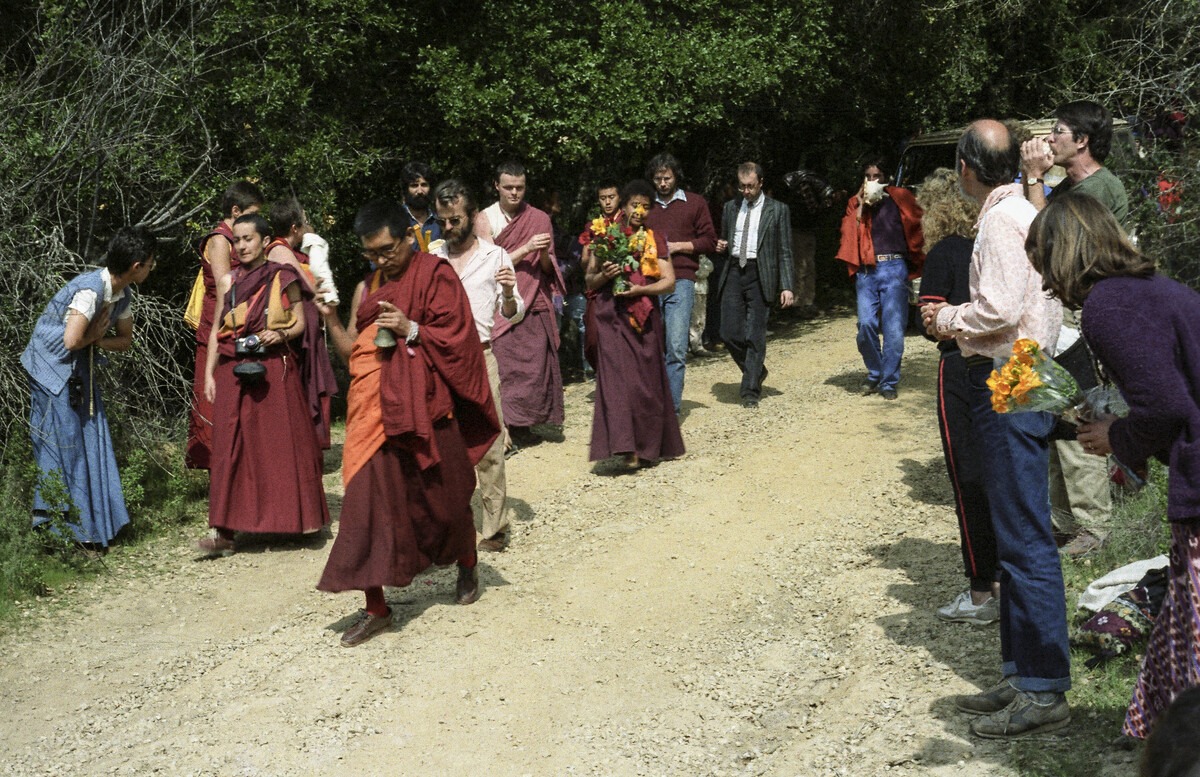
Lama Zopa Rinpoche leading the procession to the cremation of Lama Yeshe, followed by Mummy Max, Massimo Corona and other students. Vajrapani Institute, California, March, 1984. Age Delbanco (Babaji) (Photographer). Photo by LYWA collection.
At the time, Massimo happened to be in New York on business. As soon as he heard the news, he and Susanna flew to California and drove directly to Vajrapani Institute. They arrived just as Lama Zopa Rinpoche and Geshe Sopa were about to open Lama Yeshe’s casket. “Rinpoche held my hand and said, ‘The beautiful film is finished. Now the movie has come to an end. Don’t worry. Lama loved you so much. You always did what he wanted,'” Massimo remembered. “From then on it was all pujas. It was intense, very intense, I cried very strongly.”
Building the Foundation
Massimo’s service continued through the following decades alongside his work in business.
In December 1995, he helped establish FPMT Italy as a national legal entity, an initiative led by his mother, Wilma, together with other students. Ownership of Istituto Lama Tzong Khapa was transferred to the new foundation after the original owners generously donated their shares.
In 1998, his father, Pino Corona, passed away. Years earlier, Lama Yeshe had asked that a plaque be placed at the Institute in recognition of the generosity of the Corona family, saying that without their support the center would not have existed. Although the plaque was never installed, Lama’s words remain a lasting tribute to their generosity.
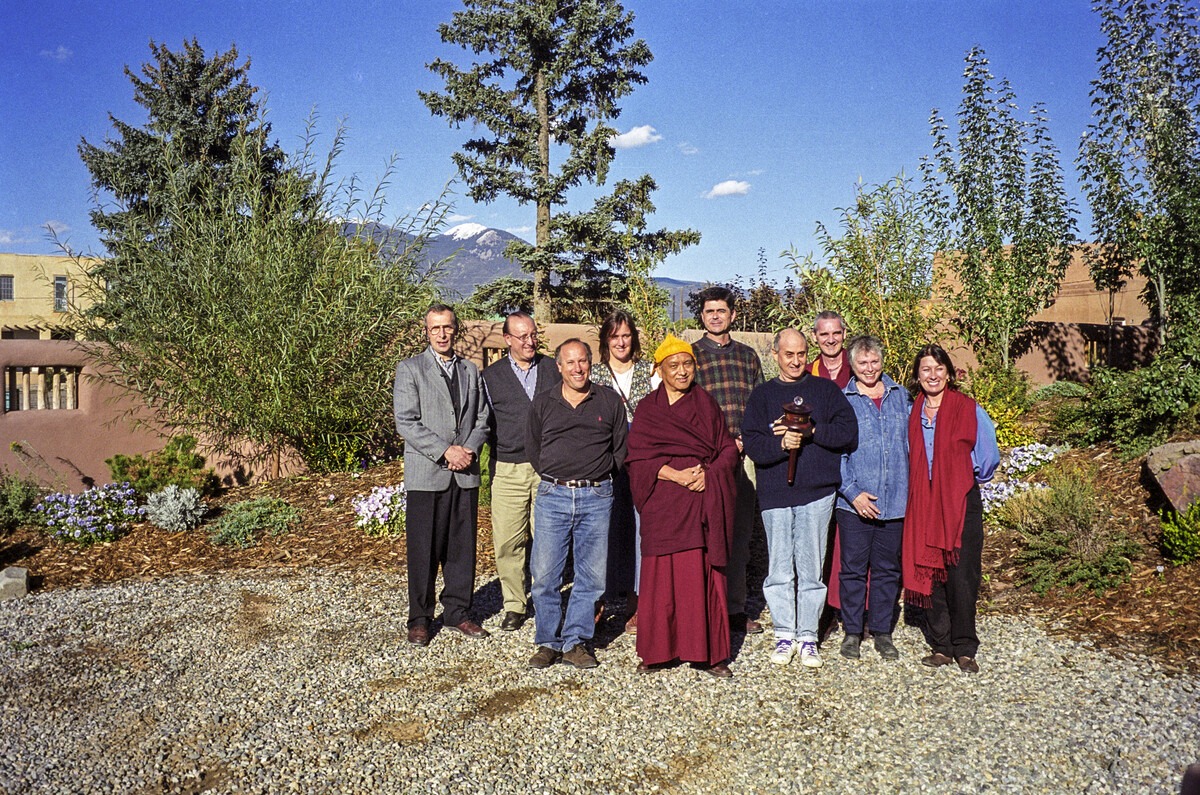
Group photo with Lama Zopa Rinpoche in Taos, New Mexico, 1999. Photo by Roger Kunsang.
At the end of 1999, Massimo became executive director of FPMT International Office, then relocating from Land of Medicine Buddha in California to Taos, New Mexico. Drawing on his background in business and finance, he introduced professional accounting procedures and arranged for FPMT Inc.’s financial records to be certified by public accountants—work that later proved essential when government authorities requested documentation of the organization’s finances. He also served as publisher of Mandala magazine during this period, and worked to expand Mandala‘s international readership. The magazine, however, continued to serve primarily as the voice of the FPMT community, remaining true to its longstanding mission.
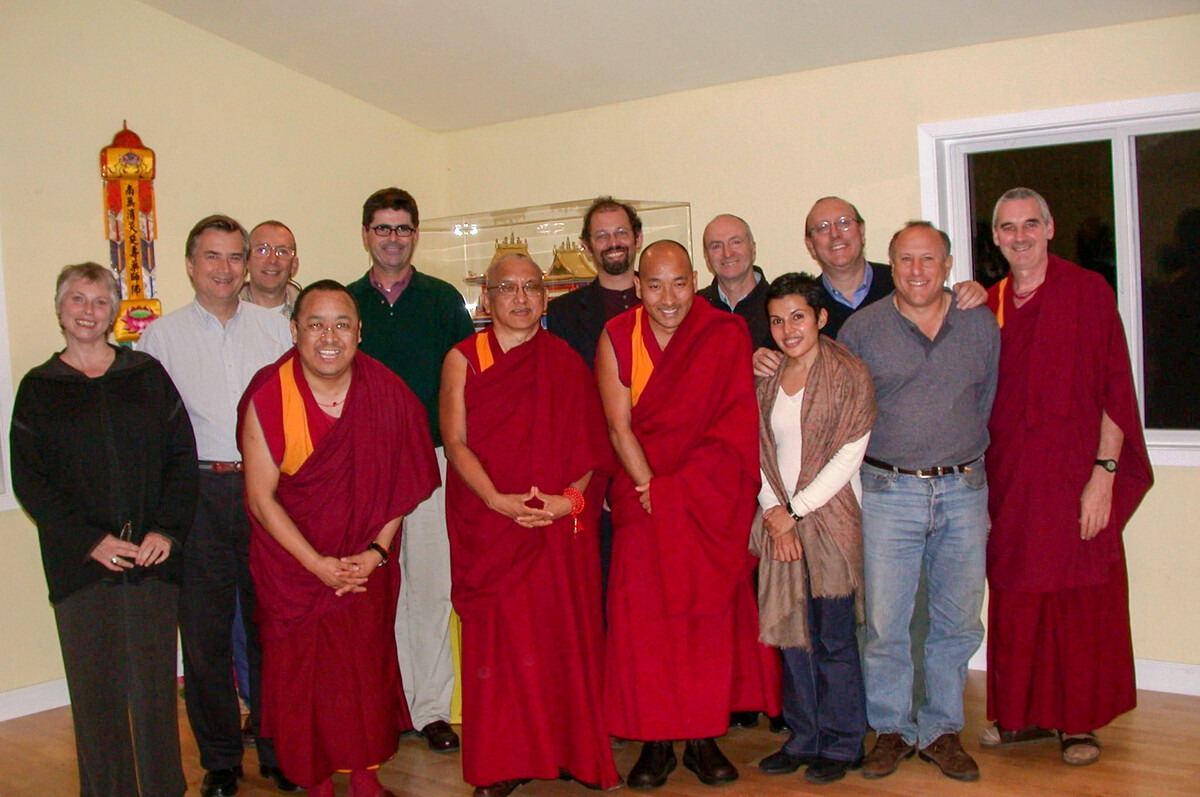
Lama Zopa Rinpoche with FPMT Board of Directors. USA, 2002. Photo by Roger Kunsang.
In May 2002, Massimo organized a pilgrimage to Mount Kailash with Lama Zopa Rinpoche during the holy time of Saka Dawa, bringing together about fifty pilgrims from around the world. From this journey came the FPMT documentary Mystic Tibet: An Outer, Inner, and Secret Pilgrimage, by filmmaker Christina Lundberg. When plans for the pilgrimage changed repeatedly because of unforeseen circumstances that Lama Zopa saw in his mo divination, the group ultimately undertook a pilgrimage around Central Tibet instead. The participants made pilgrimage to many holy places, including a late-night puja at the nunnery where Lama Yeshe’s former incarnation was once abbess. “A really special time” recalled Massimo, during which “Lama Zopa explained everything.”
At Milarepa’s cave, Rinpoche advised the group to pray strongly for the ability to actualize guru devotion as Milarepa had. For Massimo, guru devotion has remained the foundation of his life of service. “Whatever difficulties one has, it can be overcome by the guru devotion practice.”
Looking back over decades of service, he sees no separation between Dharma practice and organizational work. “My advice is to really try to integrate the FPMT work with Dharma with the Guru Devotion […] and if I am working for that, I’m doing it with a very strong devotion, try to make it possible and realize whatever was his vision.” He believes this is especially important for those serving in leadership positions at centers, study groups, and projects: “It is a bigger responsibility if you’re doing it to please your guru; even if you encounter obstacles if you have the guru in your heart, they don’t hurt you.”
Massimo stepped down as executive director of International Office and publisher of Mandala in 2006, though he remained on the FPMT Inc. Board of Directors until June 2008.
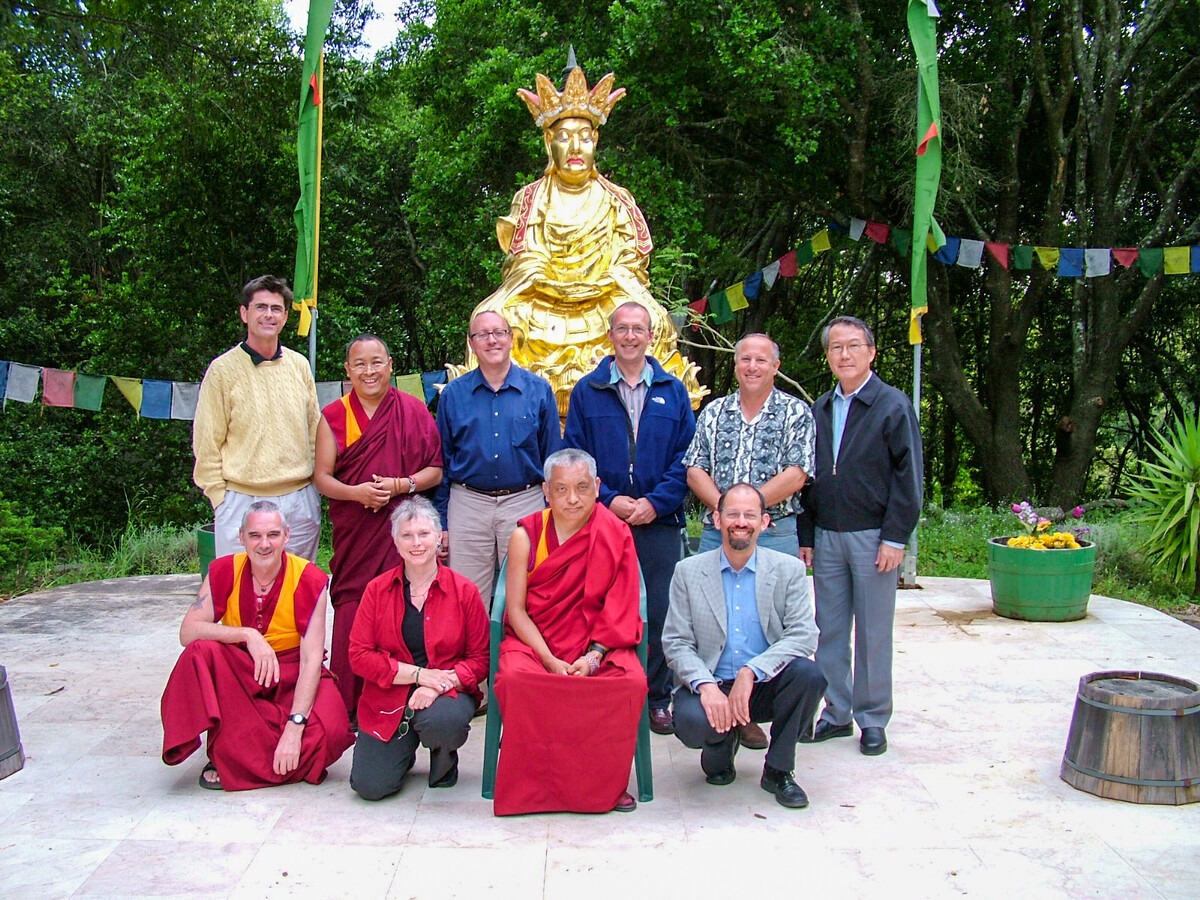
Lama Zopa Rinpoche with the FPMT Board of Directors, US, 2004. Photo by Roger Kunsang.
Although he had completed many years of organizational responsibility, his wish remained the same. “I kept saying to Lama Zopa all the time, ‘I want to work for you. I dedicate my life to your activities, whatever they are.'” In 2012, that wish was answered: Ven. Roger Kunsang called to relay Rinpoche’s request that Massimo serve in Ulaanbaatar, at the Ganden Do Ngag Shedrup Ling center of FPMT Mongolia. Massimo served as director there for eighteen months. Among his strongest memories is the devotion of the local community. “Every day they were coming to the room, the ground floor of the building, these ladies doing all kinds of offerings, water bowl offerings, early morning, every day,” he said. “One woman told me, ‘I have to thank you. Since my husband started coming here, he stopped drinking.'”
After returning to Italy in 2015, he rejoined the community at Istituto Lama Tzong Khapa. Around 2020, a moment of urgent need for the Institute, he was once again asked to serve—this time as interim president of the board.
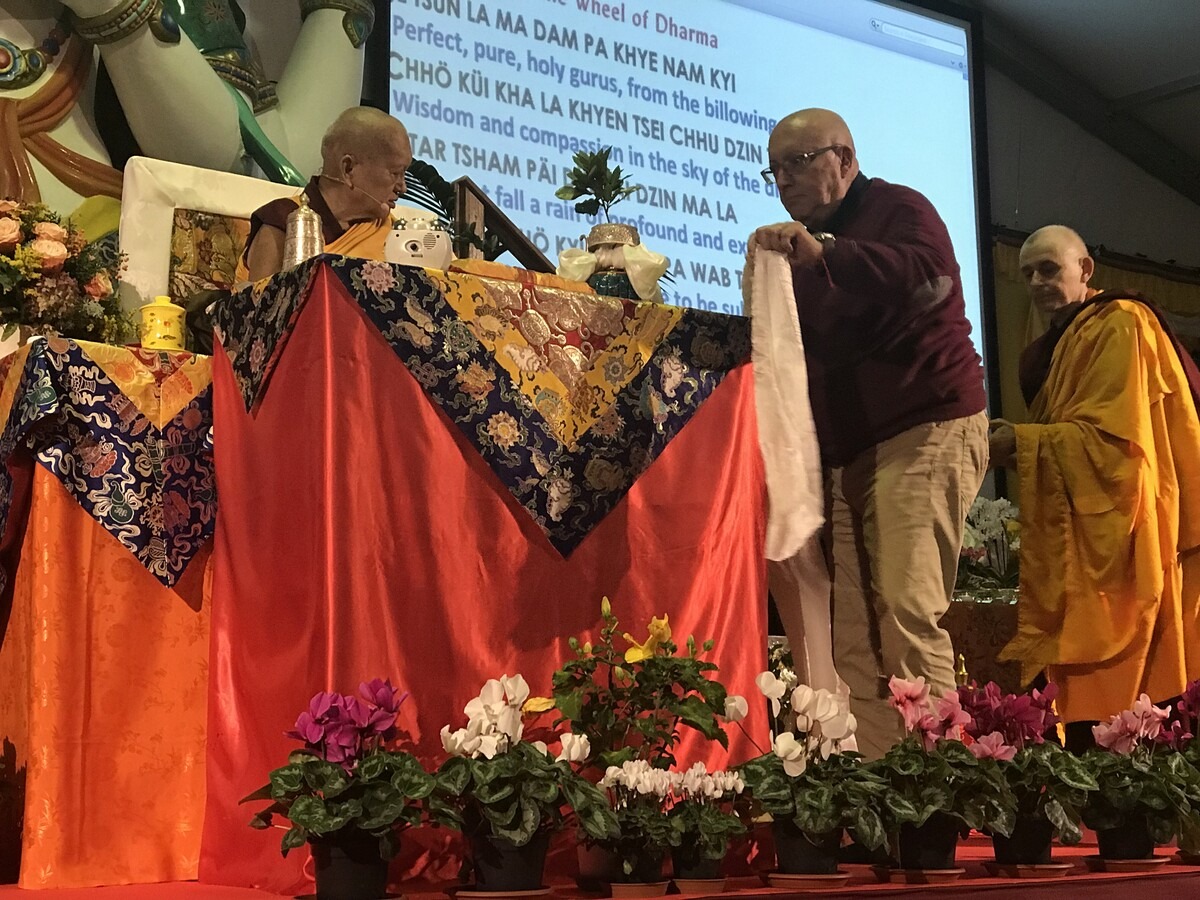
Massimo Corona offering kata to Lama Zopa Rinpoche. Istituto Lama Tzong Khapa, Italy 2017. Photo by Roger Kunsang.
Today, Massimo and Susanna live in a house provided by Istituto Lama Tzong Khapa in recognition of his decades of service. Although he was born into considerable wealth, Massimo used what would have been his inheritance to help purchase the Institute and later donated his ownership share to FPMT Italy. Looking back, he says he has never regretted that decision. “I actually rejoice when I think of all the people who came here and found the entrance to a real spiritual practice—not an ego-driven one. That’s fantastic.”
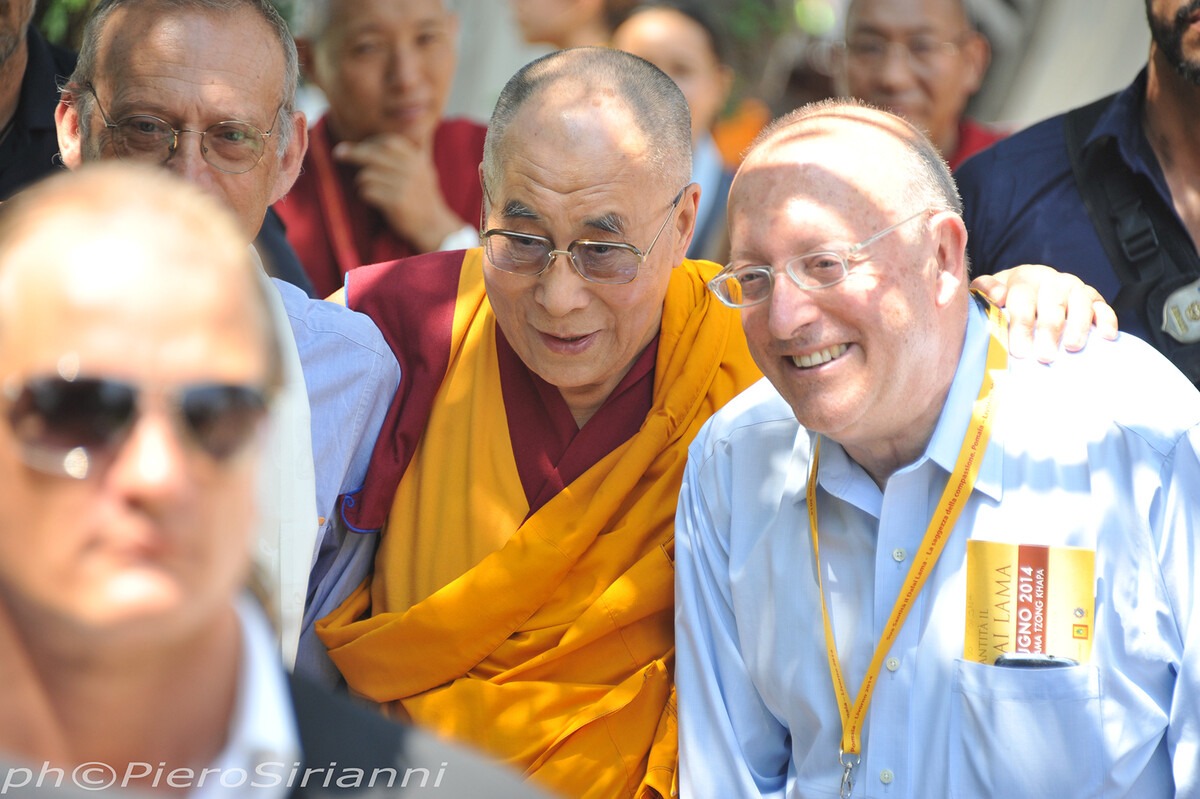
His Holiness the 14th Dalia Lama with Massimo Corona, Istituto Lama Tzong Khapa, Italy, June 13, 2014. Photo by Piero Sirianni.
For Massimo, that offering was never simply about a building. It was another expression of guru devotion. “I dedicate my life to the Dharma activities of our Lamas, whatever they are.” From a young man searching for a teacher on the road to Kopan, to one of FPMT’s earliest center directors, a founding board member, and a longtime leader of International Office and Mandala, Massimo Corona’s life has been shaped, decade after decade, by a single unwavering thread: devotion to his gurus and willingness to serve wherever needed. His story is also the story of a family’s offering. Through the generosity of his family, Pino, Wilma and Luca Corona, the encouragement and companionship of Susanna, and Massimo’s own willingness to dedicate his time, resources, and abilities to the Dharma, countless students have encountered the teachings through the communities they helped establish and sustain. More than five decades after first arriving at Kopan, the thread that has guided his life remains unchanged: serving the vision of his gurus so that others may encounter the Dharma.
We rejoice in his kindness, in the kindness of his whole family, and in the countless lives that have benefited, and continue to benefit, from what they offered.
With grateful thanks to Fabiana Lotito for conducting interviews with Massimo about his life with the FPMT organization.
Are you an early student of FPMT who was there at the beginning? Do you have a story to share about how you met Lama Yeshe or Lama Zopa Rinpoche or the impact they have had on your life? Have you personally achieved or actualized a request, advice, practice accomplishment, or project given to you by Lama Yeshe or Lama Zopa Rinpoche? We want to hear from you!
Please explore all of the resources we have compiled related to FPMT history. We look forward to all of your creative ideas on how to bring this year-long celebration to your own local activities and personal practices! Please use the hashtag #50YearsFPMT in your social media posts so we can all be connected in this way.
Foundation for the Preservation of Mahayana Tradition (FPMT), is a Tibetan Buddhist organization dedicated to the transmission of the Mahayana Buddhist tradition and values worldwide through teaching, meditation and community service.